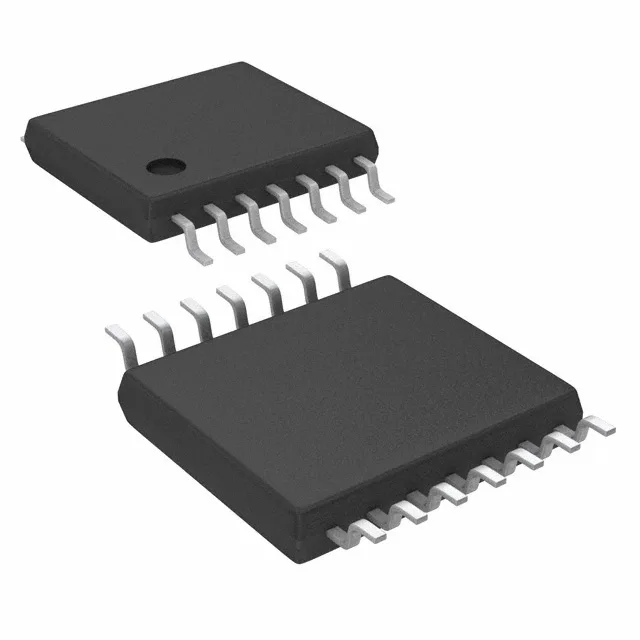
The MAX995EUD+T is a quad general-purpose comparator from Analog Devices, packing four independent comparator elements into a 14-TSSOP package. With a quiescent current of 96µA max across the full supply range, it fits into power-sensitive designs where multiple threshold or zero-crossing detections are needed without draining the rail. The 210ns typical propagation delay sets the response ceiling for fast overcurrent or undervoltage detection loops — a 210ns delay at 5V supply means the output transitions within a quarter-microsecond of the input crossing the reference, fast enough for most industrial sensor interfaces and comparator-based window detectors.
Parametric fit: input offset, bias, hysteresis, and output drive
Built-in hysteresis of ±2.5mV prevents output chatter on slow-moving or noisy input signals — useful when comparing a sensor output that drifts near the reference voltage, as the hysteresis band suppresses multiple transitions without external positive feedback components. Common-mode and power-supply rejection are both 80dB typical — this means a 1V change in the supply or common-mode voltage shifts the input-referred offset by only 100µV, maintaining threshold accuracy in systems where the supply rail droops under load or the input signal rides on a noisy ground.