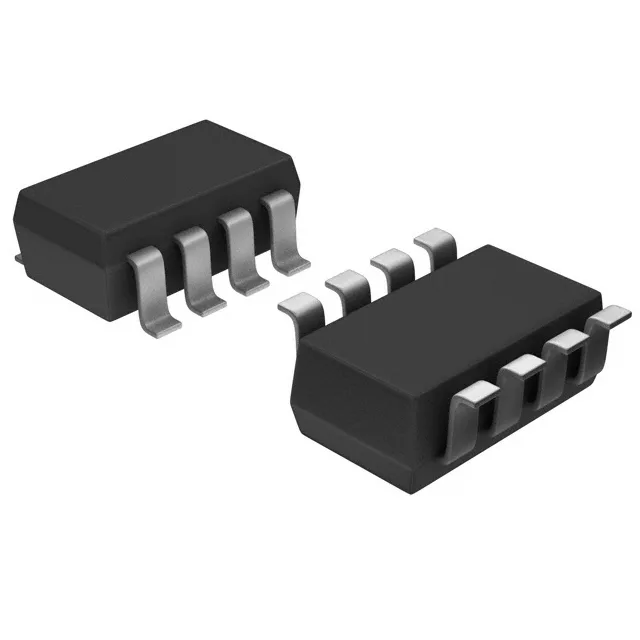
The MAX9374AEKA+T comes in an 8-pin SOT-23 package (SOT-23-8). The 0.65 mm pitch and 2.9 mm body width are standard for this footprint family, so the land pattern is well-documented and the part places reliably on a standard pick-and-place line. Confirm the reel label if the part has been in uncontrolled storage for more than 12 months.
Signal translation — what the LVPECL-to-LVDS path means for your link
This is a unidirectional, single-channel translator: it takes a differential LVPECL input and outputs a differential LVDS signal. The LVPECL input threshold is compatible with standard 3.3 V PECL levels; the LVDS output swings 350 mV typical into a 100-ohm termination, which mates directly with LVDS receivers on FPGAs, ASICs, or cable drivers. Because the translation is unidirectional, the return path (LVDS to LVPECL) requires a separate device. For a bidirectional link, you would need two parts or a bidirectional translator.
This covers most indoor and outdoor telecom, base-station, and industrial control environments. Not AEC-Q100 qualified, so avoid automotive under-hood or cabin applications where the ambient exceeds 85°C or requires automotive reliability screening.
It is RoHS3 compliant (2011/65/EU + 2015/863) with no exempt substances, so it passes EU RoHS without an exemption expiry date.