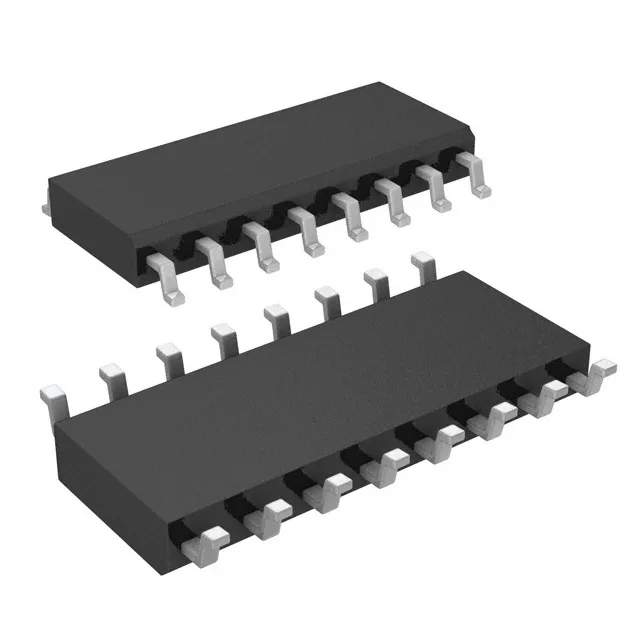
Quad comparator with on-chip reference
The MAX924CSE+ integrates four independent comparators with a single voltage reference on one die, eliminating the external reference IC and its bypass caps from the BOM. Outputs are CMOS and TTL compatible — the 50 mA typical output current drives logic inputs directly without a buffer stage. Propagation delay is 12 µs max, placing this part in the general-purpose comparator class — suitable for threshold detection, zero-crossing sensing, and window comparators where sub-microsecond response is not required.
Single-supply range is 2.5 V to 11 V; dual-supply operation spans ±1.25 V to ±5.5 V, so the same part works in a 3.3 V microcontroller system or a ±5 V analog front-end. Maximum quiescent current is 11 µA across all four comparators — the reference and comparators together draw less than a single LED indicator, making this a fit for battery-powered threshold monitors that run continuously. Input offset voltage is 10 mV max at 5 V — adequate for rail-referenced trip points where the signal swing is hundreds of millivolts or more.
CMRR and PSRR for noisy environments
Typical CMRR and PSRR are both 80 dB — common-mode and supply variations are rejected by a factor of 10,000, so the trip threshold stays stable when the input signal rides on a noisy ground or the supply rail sags.