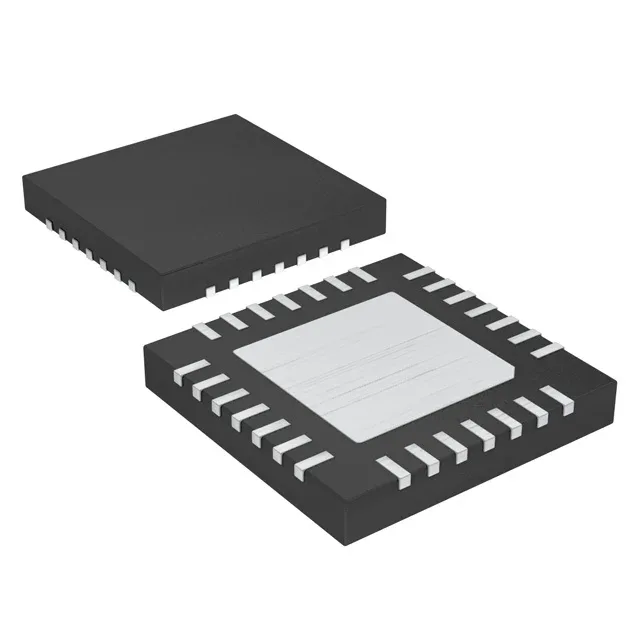
Single-cell Li-Ion charger with USB input and over-voltage protection
It accepts a USB or adapter input up to 6.6V and delivers a programmable constant-current charge up to 1.5A to a 4.2V battery pack. The device integrates over-voltage fault protection on the input, and the charge current and timer are programmable via external components.
1.5A charge current — sizing the power path
The 1.5A maximum charge current is the rating that drives the thermal design. In a 28-WFQFN exposed-pad package, the linear regulator drops the input-to-battery voltage as heat, so at full current with a 5V input and a depleted 3.0V cell, the power dissipation is roughly 3W. For lower dissipation, the current is programmable — the constant-current loop lets you set a lower limit with a single resistor, which is the usual move when charging from a USB port that may share a 500 mA budget.
For a new design going into production, this means the charger IC is not a supply-chain risk item — you can qualify it into the BOM without planning for an end-of-life migration within the product's expected run.