Negative rail from a positive supply — the charge pump approach
It delivers up to 200 mA of output current and switches at 2 MHz, which keeps the external flying and reservoir capacitors small — typically 1 µF to 10 µF ceramic types. The input range spans 2.7 V to 5.5 V, so it can run from a single Li-ion cell, a 3.3 V rail, or a 5 V rail.
What the 200 mA output means for your load budget
The 200 mA rating is the maximum continuous output current. For a negative rail powering a handful of op-amps, a small LCD bias, or a low-power RF switch, this is ample. If your load draws close to the limit, factor in the charge pump's efficiency — at 200 mA the input current will be roughly 1.5× to 2× the output current, depending on input-to-output voltage ratio. The 2 MHz switching means the ripple frequency is high enough that a small LC post-filter can knock it down to low-noise levels, which is relevant if the rail feeds sensitive analog circuitry.
No synchronous rectifier means the charge pump uses diode-based switching — fine for this current level, but the forward drop of the external Schottky diode adds to the dropout. At cold temperatures the diode drop increases slightly, so budget an extra 100 mV or so on the dropout margin.
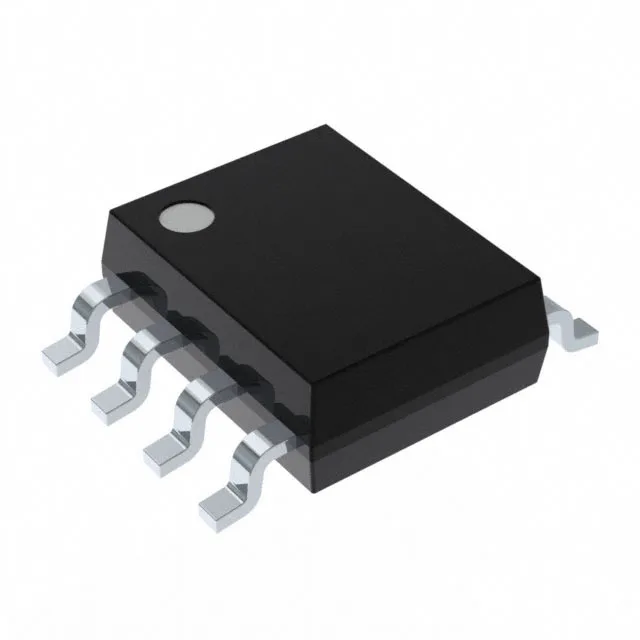
Package and footprint — 8-SOIC
The shipping medium is Tube. The 8-SOIC body is 3.90 mm wide, which fits standard SOIC-8 land patterns.
The active status means no imminent supply risk for production builds.