62 dB PSRR at 100 Hz — noise-sensitive rail fit
The MAX8531EBTJJ delivers 62 dB power-supply rejection ratio at 100 Hz, meaning it attenuates 100 Hz ripple from a switching pre-regulator or AC-line rectifier by a factor of roughly 1,250 before it reaches the load. For an analog sensor or audio codec drawing from the 2.85 V output, that keeps the supply noise floor below the signal chain's own noise budget. Two independent LDO regulators share the die — one rated 200 mA, the other 150 mA, both fixed at 2.85 V output. The dual-output architecture lets a single IC power separate analog and digital rails at the same voltage, saving board space over two discrete LDOs.
Dropout and quiescent — battery-system headroom
Maximum dropout is 200 mV at 100 mA load on each output. In a 3.6 V Li-ion application, the battery must stay above 3.05 V to keep the 2.85 V rail in regulation — the last ~10% of cell capacity below that voltage is unusable without a boost stage ahead of the LDO. Quiescent current is 220 µA typical. For an always-on sensor node that spends most of its time in a low-power state, this Iq is a continuous drain — the system architect should budget it against the battery's self-discharge and the MCU sleep current to size the cell correctly. Protection features include over-current, over-temperature, and short-circuit shutdown — the LDO survives a sustained output short without damage, and auto-recovers when the fault clears.
6-WLP package — board-fit for compact designs
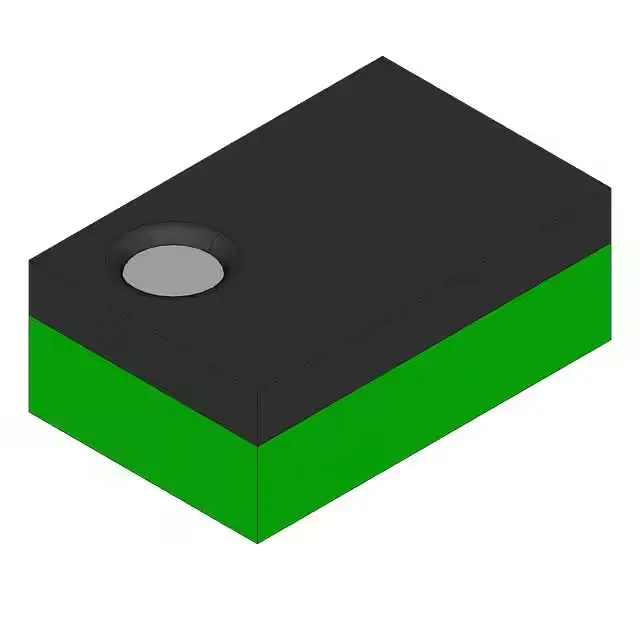
The 6-WFBGA, WLBGA package (6-WLP supplier device package) measures roughly 1.5 × 1.5 mm with a 0.50 mm ball pitch — the footprint fits under a small sensor module or alongside a coin-cell holder. The 0.50 mm pitch demands a soldermask-defined pad and a 0.25 mm via capture pad for fan-out; a two-layer board with microvias handles the routing.
Active lifecycle — sourcing posture
RoHS non-compliant per the manufacturer's declaration — the part contains lead in the solder balls (SnPb finish typical of older WLP packages). For RoHS-required builds, verify the exemption or select a Pb-free variant from the same family.