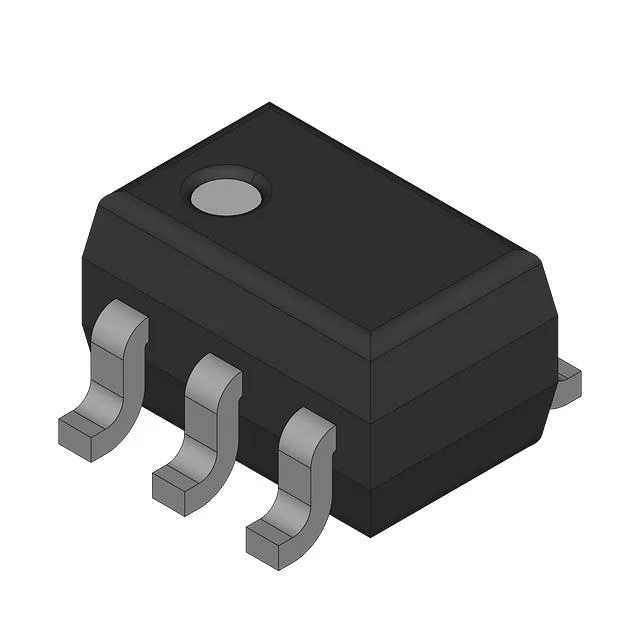
3.3 V fixed rail, 120 mA — what the dropout and PSRR mean for the board
The MAX8510EXK33 is a single-output linear LDO from Analog Devices, delivering a fixed 3.3 V at 120 mA from a maximum input of 6 V. PSRR runs 78 dB at 1 kHz and 54 dB at 100 kHz — the 100 kHz figure is the one that matters when the upstream rail comes from a switching regulator. Below 100 kHz the LDO still knocks down ripple by a factor of 500; above that the rejection rolls off and the board's own decoupling has to carry the rest. Quiescent current is 90 µA — not the lowest in class, but low enough that a sensor node pulling 1 mA average sees less than 10 % overhead from the regulator itself. The shutdown pin (active-low) drops Iq to near zero when the load is parked.
Protection and temperature — what the silicon does when things go wrong
Over-current and over-temperature protection are on-die. The current limit folds back the output before the pass element exceeds its safe operating area; the thermal shutdown trips at roughly 160 °C junction and auto-recovers when the die cools. No external sense resistor or watchdog needed. Industrial temperature range (-40 to 85 °C ambient) covers most factory-floor and outdoor telecom enclosures. The SC-70-5 package has a theta-JA around 250 °C/W on a standard two-layer board — at 120 mA and 1 V dropout the die rises about 30 °C above ambient, leaving margin to the shutdown threshold.
Lifecycle and compliance — what the buyer needs to know
RoHS non-compliant. If the target market requires RoHS exemption documentation or a full material declaration, confirm the acceptance criteria before committing the BOM line.