3.5V to 24V input, fixed 3.3V output at 300 mA
The MAX77596ETBB+T is a step-down (buck) switching regulator from Analog Devices that delivers a fixed 3.3V output at up to 300 mA from a 3.5V to 24V input rail. That input range covers 5V logic rails, 12V industrial supplies, and 24V field power — so this part can sit on a factory-floor sensor node or a building-automation controller without needing a separate pre-regulator. With synchronous rectification on-chip, the efficiency holds up across the load range without an external catch diode. The fixed 3.3V output means the feedback divider is internal; no resistor network needed on the board.
Package and thermal layout
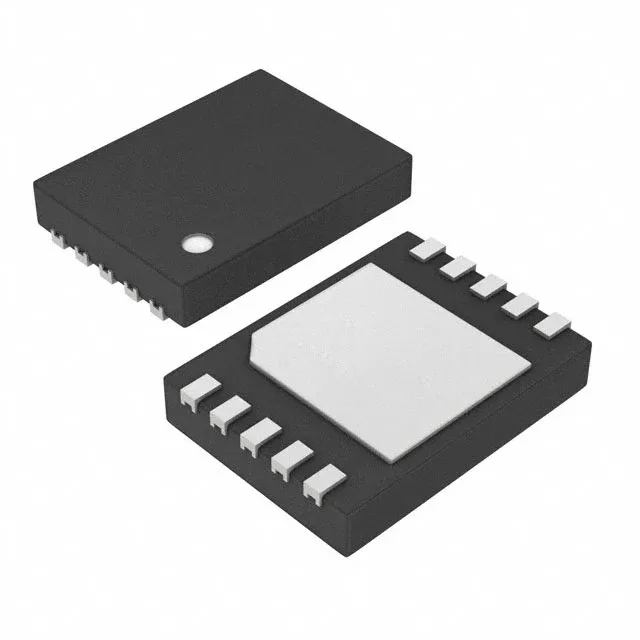
The 10-WFDFN exposed-pad package (supplier device package 10-TDFN, 2.5x2 mm) requires a thermal land on the PCB. The exposed paddle is the main heat path — without at least four thermal vias to an inner ground plane, the junction temperature rises faster than the 85°C ambient limit allows at full load. The cut-tape or tape-and-reel options suit prototype hand-assembly as well as production pick-and-place.
For a BOM hedge, the parametric match (3.5-24V in, 3.3V out, 300 mA, synchronous, 1.75 MHz, 10-TDFN) is tight enough that most alternatives in this class require a layout change — confirm the pinout before substituting.