Negative rail from a positive input — what this part does
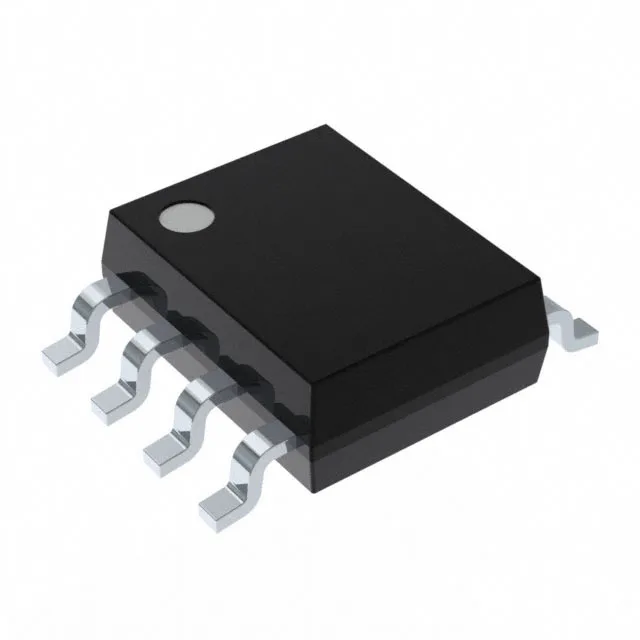
The Maxim Integrated MAX764ESA+T is a buck-boost switching regulator that takes a positive input from 3V to 16V and produces a regulated negative output. The output is adjustable down to -16V, or you can use the fixed -5V option. It delivers up to 260 mA, switching at 300 kHz, in an 8-SOIC package.
The 260 mA output current is the continuous rating; it's enough for a modest negative rail but not for powering a whole subsystem. If your load pulls more than that, you'll see the output drop out of regulation — the scorch mark tells you where the failure is. The 300 kHz switching frequency is a practical middle ground: it keeps the inductor small (typically 22 µH to 47 µH range) without pushing switching losses too high. At this frequency, the output ripple will be in the tens of millivolts with a decent output capacitor, so it's fine for analog supplies if you add a post-filter. No synchronous rectifier here — the external Schottky diode takes the hit, so watch the diode's thermal rating at full load.
Input and output voltage range — the practical limits
The input range spans 3V to 16V. The 3V minimum means a single Li-ion cell won't cut it once it drops below that — you'll need a boost front-end or a two-cell battery. The output goes from -1V down to -16V, adjustable with a resistor divider. The fixed -5V option (the 'Fixed' in the output type) simplifies the BOM for common -5V rails. The negative output configuration is the key differentiator here: most regulators produce positive rails, so this part fills a specific niche for designs that need a clean inverted supply.
If your application lives in a hot engine bay or a server rack, the 85°C ceiling might be tight; budget some airflow or derate the output current.
It's ROHS3 compliant, which clears the usual environmental restrictions for new designs.