MAX6675ISA+
Analog Devices
IC THERMOCOUP TO DGTL 8-SOIC
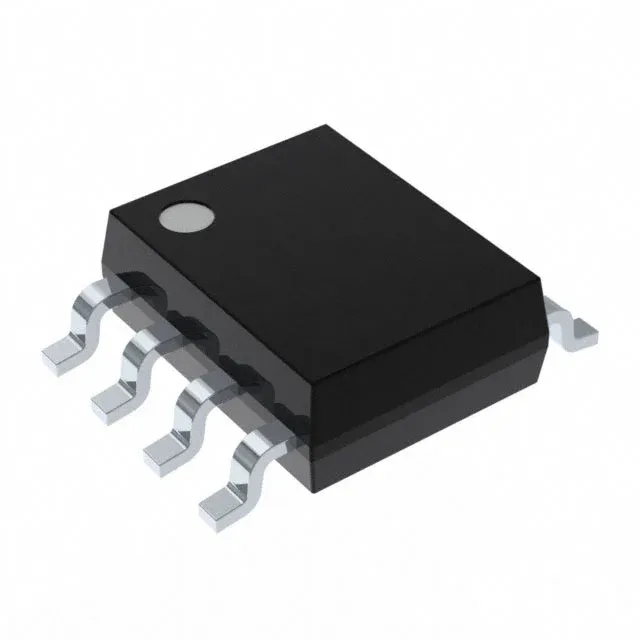
MOQ 1 · Tube · RoHS · EIA-481 · DAP/DDP · T/T
Technical specifications
| Parameter / Attribute | Specification / Value |
|---|---|
| Type | Thermocouple to Digital Converter |
| Input type | Thermocouple (K) |
| Output type | Digital |
| Mounting | Surface Mount |
| Current - supply | 1.5 mA |
| Operating temperature | -20°C ~ 85°C |
| Package | Tube |
| Case | 8-SOIC (0.154\", 3.90mm Width) |
Need Stock or a Drop-in Second-Source for MAX6675ISA+?
Package: SO-8 / module · Pin-compatible replacements with immediate Shenzhen spot stock
These two chips are how hobby and industrial projects read K-type thermocouples: an SPI-ish three-wire interface, cold-junction compensation included, 0.25C steps out - and a substitution story that catches people exactly once. The MAX6675 is discontinued, the MAX31855 is its documented successor, and despite the family resemblance they are neither pin-compatible nor code-compatible: the supply windows differ, the T- pin moves from ground to floating, the temperature range and fault vocabulary expand, and the SPI frames changed enough that each has its own library. The market is full of adapter modules for both - the honest repair path depends on which one the firmware was written for.
Verified Pin-Compatible Replacements (2 verified alternatives)
The Successor - Wider Range, Faster, Sharper Faults
Shenzhen Spot Stock (24-48h Dispatch)
The upgrade generation: -200C to +1350C class range (against 0-1024C), 14-bit conversion at about 100ms (against 12-bit at 220ms), and a richer fault set - open thermocouple plus short-to-ground and short-to-supply detection, plus the internal temperature in the output frame.
3.0V to 3.6V natively - the common breakouts add a regulator and level shifting for 5V logic rather than the bare chip tolerating 5V.
The Modern Universal Reader
Shenzhen Spot Stock (24-48h Dispatch)
The current-generation thermocouple front end: multi-type support with on-chip linearization (where both the 6675 and 31855 leave the thermocouple curve unlinearized), 19-bit resolution class, and the full fault vocabulary.
3.3V-class supply; SPI interface.
Buyer & Quality Checklist for Sourcing Alternatives
- Firmware decides, not the socket: the 6675 and 31855 use different output frames and have separate libraries - a repair fitted with the "upgraded" chip runs the wrong driver and reports plausible garbage. Match the part to the code, or port the code.
- The T- wiring flips between the generations: ground on the 6675, floating on the 31855 (negative lead connected at the connector). Boards transplanted between the two read offset errors until the wiring follows the chip.
- Supply windows differ: the 31855 is a 3.0-3.6V part (breakouts add regulation for 5V systems), the 6675 tolerated 3.0-5.5V. Feeding 5V directly to a bare 31855 is the substitution that ends the repair.
- Neither older part linearizes the thermocouple curve: expect a few degrees of systematic error rising toward the high end - if the process needs accuracy across the range, the MAX31856 generation is the honest answer.
- K-type only on the 6675; the 31855 suffix letter chooses the thermocouple type - order the suffix for the probe actually fitted, not the family name.
- In repair of Chinese module boards, the amp chip often ships as a relabel or the cheaper generation: verify by reading a known temperature and checking the fault behavior with an open probe - the generations differ in fault reporting in visible ways.
Frequently Asked Technical Questions
Q: Is MAX31855 a drop-in replacement for MAX6675?
A: No - electrically similar function, but not pin-compatible and not code-compatible: different supply windows, the T- pin moves from ground to floating, the output frame changed, and each chip has its own library. Substitution means adapting wiring and driver.
Q: Why does my repaired board read wrong temperatures?
A: Likely a generation mix: a 31855 running 6675 code (or the reverse) produces plausible-looking values from the wrong frame layout, and the T- wiring difference adds offset. Match chip, wiring and driver as one decision.
Q: Which part should a new design use?
A: By temperature range and accuracy: the 6675 for budget sub-1000C work, the 31855 for wider range, speed and fault detection, the MAX31856 when accuracy across temperature matters - it is the first of the family to linearize the thermocouple curve.