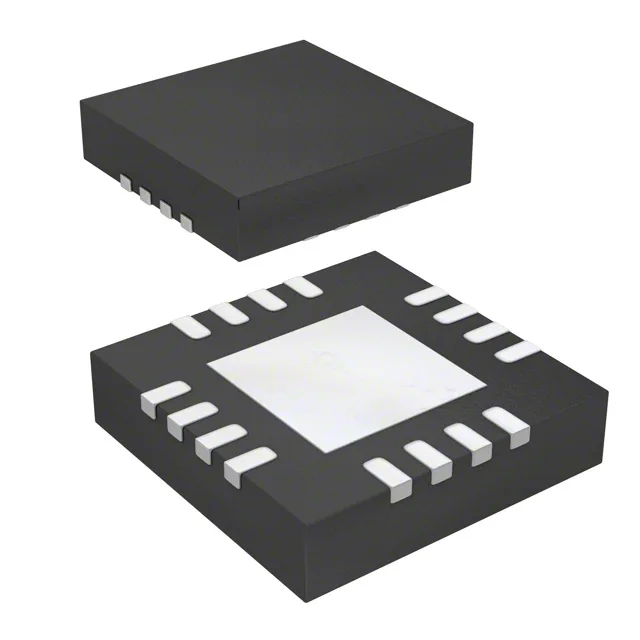
Analog Devices MAX5494ETE+ — Crystals & Oscillators

MAX5494ETE+ Digital Potentiometer 10k 1024-Tap SPI

MPNMAX5494ETE+
End of Life

Analog Devices MAX5494ETE+, dual 10 kΩ digital potentiometer, 1024 taps per channel, linear taper, SPI interface, non-volatile memory, 16-TQFN (5x5 mm) package, -40°C to +85°C operation.

$11.26Ref. price · indicative, final on quote
Packaging16-WQFN Exposed Pad
RoHSROHS3 Compliant
Sourced new & surplus through independent channelsAuthenticity-screened · ESD-safe packingListing updated Aug 2026

Specifications

MAX5494ETE+ specifications
ParameterValue
Memory typeNon-Volatile
MountingSurface Mount
Voltage2.7V ~ 5.25V, ±2.5V ~ 5.25V
InterfaceSPI
Operating temperature-40°C ~ 85°C
TaperLinear
PackageTube
Tolerance±25%
ConfigurationPotentiometer
Number of taps1024
Case16-WQFN Exposed Pad
Resistance10k
Number of circuits2
Temperature coefficient35ppm/°C
Resistance - wiper (Ohms)50

Product details

Dual 10 kΩ digital pot with 1024-tap resolution

The MAX5494ETE+ is a dual-channel, 10 kΩ digital potentiometer from Analog Devices with a linear taper and 1024 wiper positions per channel. Non-volatile memory stores the wiper setting at power-down, so a volume level or offset calibration survives a cycle without a microcontroller re-write. The SPI interface lets you daisy-chain multiple pots on a single bus.

Supply flexibility and industrial temperature range

Supply voltage spans 2.7 V to 5.25 V in single-supply mode, or ±2.5 V to ±5.25 V split supplies.

Package, footprint, and sourcing posture

Housed in a 16-TQFN (5x5 mm) with an exposed pad. Lifecycle status is Active, ROHS3 compliant. Sourced per RFQ — confirm the BOM quantity and date-code preference at quote time.

Frequently asked questions

What does the ±25% tolerance mean for my design?

The end-to-end resistance tolerance of ±25% means the absolute resistance between H and L pins can vary from 7.5 kΩ to 12.5 kΩ across parts. The wiper-to-rail ratio is accurate to 1 LSB, so the tolerance affects only the absolute current or voltage scale, not the linearity. If you need a precise reference divider, calibrate the full-scale at test.