50kΩ, 128 taps, SPI — the digital trimmer for single or bipolar rails
It communicates over an SPI interface, making it a direct digital replacement for mechanical trimmers in programmable gain amplifiers, audio level control, LCD bias adjustment, and sensor calibration circuits. The part accepts a wide single-supply range of 10V to 30V or split supplies of ±5V to ±15V, which lets it fit into both single-rail industrial systems and bipolar signal chains without level shifting.
Volatile memory, 900Ω wiper resistance, 35ppm/°C drift
The wiper setting is volatile — it resets to mid-scale on power-up, so the system software must restore the desired position after each power cycle. Typical wiper resistance is 900Ω, which contributes a small series offset in low-impedance divider applications.
Package and supply routing
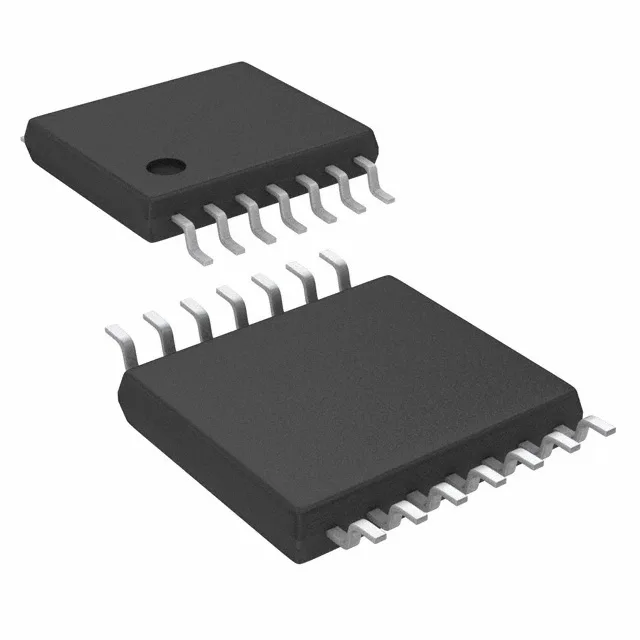
Housed in a 14-TSSOP package (4.40mm width), the MAX5437EUD+ uses a 0.65mm pin pitch typical of this footprint. The SPI interface requires only three digital lines — CS, SCLK, and DIN — plus the chip's own V+ and V- supply pins. For single-supply operation, tie V- to ground; for bipolar rails, the ±5V to ±15V range covers standard ±12V and ±15V analog supplies. The ±25% resistance tolerance means the end-to-end value can vary from 37.5kΩ to 62.5kΩ; if absolute accuracy matters, the 128-tap resolution gives fine granularity to calibrate around it in software.
It is ROHS3 compliant. No last-time-buy or date-code concerns apply to this part.