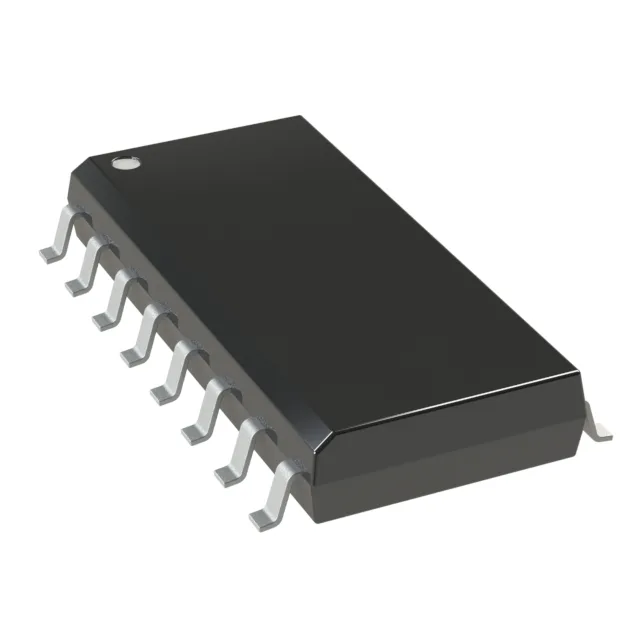
The MAX5392MAUE+ from Maxim Integrated is a dual-channel, 50kΩ digital potentiometer with 256 wiper positions per channel, using a linear taper. It communicates over an I²C interface and operates from a 1.7V to 5.5V supply, covering 1.8V, 3.3V, and 5V logic rails.
256 taps per channel give 50kΩ / 256 ≈ 195Ω per step, which is fine enough for most trim and level-setting jobs — volume controls, filter tuning, or programmable references. The linear taper means wiper resistance changes linearly with digital code, so you get equal increments across the range. Wiper resistance is 200Ω max (typical 200Ω), which matters when you are setting a low-impedance divider; budget that series resistance into your calculation. The ±25% tolerance on the total resistance is typical for digital pots — the absolute value varies part-to-part, but the ratiometric accuracy between taps is much better. If you need a precise absolute resistance, plan a calibration step or use the pot in a divider where the ratio, not the absolute value, sets the output. The memory type is volatile, so the wiper resets to mid-scale on every power-up. That is fine for a volume control or a one-time calibration stored in an external EEPROM, but not for a trim that must hold its value across power cycles without a host writing it back.
Supply voltage and I²C bus compatibility
The 1.7V to 5.5V supply range means this part works on a 3.3V rail directly — no extra level shifter needed. The I²C interface includes a selectable address feature (pin-strapped), so you can put up to two of these on the same bus without conflict. The wide supply also covers 1.8V and 5V logic, which makes it a handy single part to stock for mixed-voltage boards.