Low-power limiting amplifier for fiber-optic receiver chains
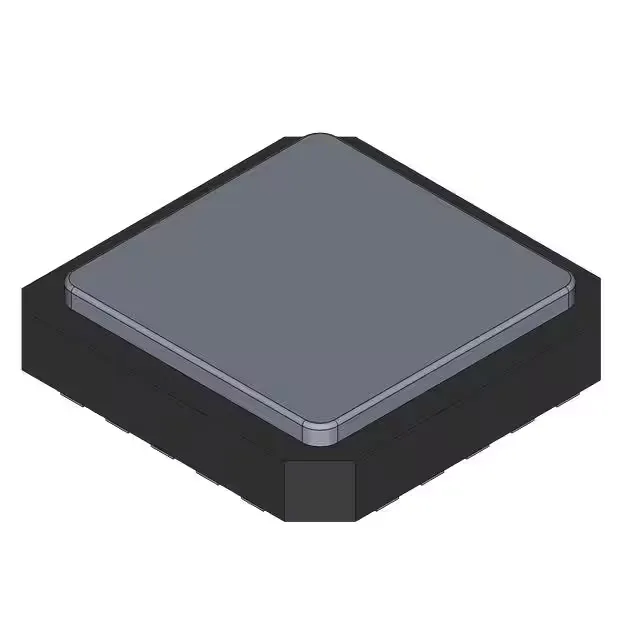
The Maxim MAX3272AEGP-T is a low-power limiting amplifier designed for fiber-optic receiver front-ends. Its job is to take a small, amplitude-varying signal from a photodiode/TIA and output a clean, full-swing digital signal to a clock-and-data recovery (CDR) chip. The part is specified as a limiting amplifier, meaning it clips the output amplitude to a fixed swing regardless of input level, which is exactly what a downstream CDR needs to maintain a stable decision threshold. Housed in a 20-VFQFN exposed-pad package (4x4 mm body, supplier device package 20-QFN), it is a surface-mount part intended for automated assembly on standard FR-4 boards.
That means this part qualifies for new-design BOM inclusion without an obsolescence watch item.
Package and footprint — what the 20-QFN (4x4) means on the board
The 4x4 mm body keeps the signal path short — critical for maintaining bandwidth in a limiting amplifier. Without that, the part derates faster.