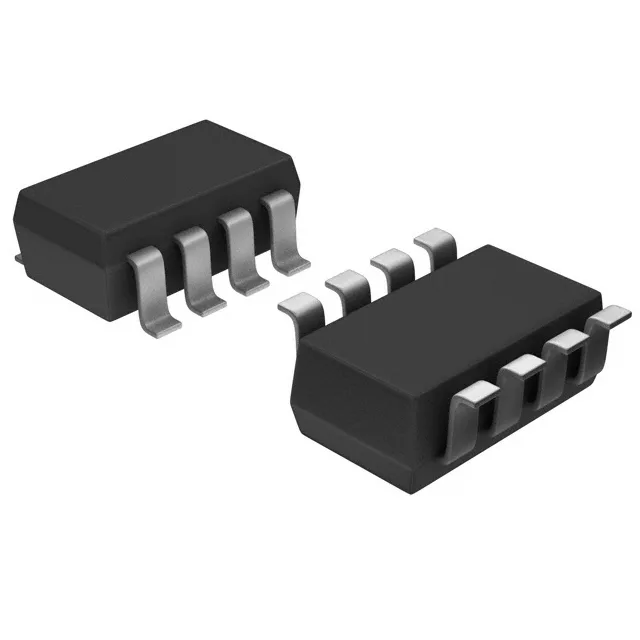
The MAX3051EKA+T from Analog Devices Inc./Maxim Integrated is a 3.3V, half-duplex CAN transceiver rated for 1 Mbps, housed in a tiny SOT-23-8 package. It is built for low supply current, which makes it a natural match for battery-powered and sensor-node CAN buses where every milliamp counts and board space is at a premium. The supply range is tightly specified at 3.14V to 3.47V, so this is effectively a 3.3V-only part: you power it from the same rail as the CAN controller and the differential bus driver operates directly off that rail, no 5V boost required. The 1 Mbps data rate covers classic CAN 2.0A/B throughput, and the 20 mV receiver hysteresis is modest but adequate for clean point-to-point and short multi-drop segments with decent cabling.
Operating from -40°C to +85°C and offered in tape-and-reel, the MAX3051EKA+T fits portable instrumentation, medical peripherals, building-automation nodes, and compact industrial sensor pods that carry CAN back to a gateway. Its SOT-23-8 footprint is significantly smaller than the 8-SOIC used by most CAN transceivers, freeing layout area on dense boards. When selecting, remember the 3.14V-3.47V window: it pairs best with 3.3V microcontrollers and regulated supplies, and you should not expect 5V bus-side compatibility. Confirm the package option — the EKA suffix denotes the SOT-23-8 body — and align your termination and common-mode range with a half-duplex single-node-per-channel topology. For a low-current 3.3V CAN interface where footprint and idle power matter more than extended temperature or isolation, the MAX3051EKA+T is a compact, proven choice.