Analog Devices MAX1771ESA+T — DC-DC Power Modules

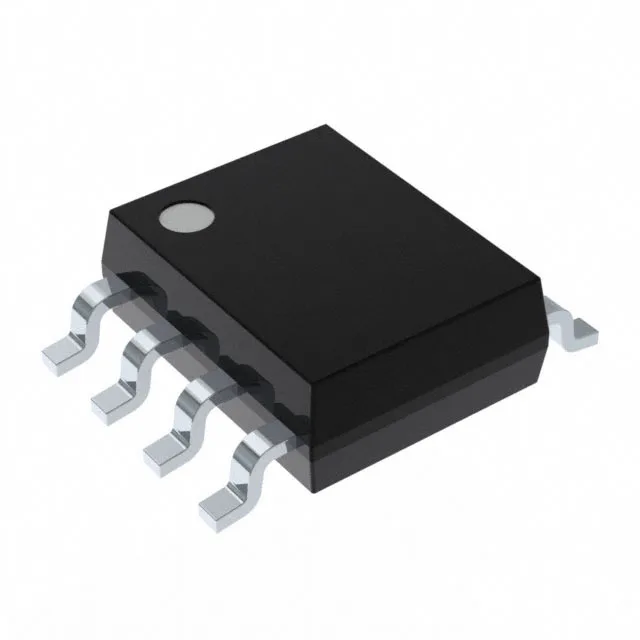
MAX1771ESA+T Boost/Buck-Boost Controller, 300kHz, 8-SOIC

MPNMAX1771ESA+T
End of Life

Maxim MAX1771ESA+T, current-mode PWM controller, boost/buck-boost topology, 300kHz fixed switching frequency, 3V to 16.5V supply, 92% max duty cycle, single output, transistor driver, 8-SOIC package, -40°C to 85°C operating temperature.

$7.6Ref. price · indicative, final on quote
Packaging8-SOIC (0.154", 3.90mm Width)
RoHSROHS3 Compliant
Independent supplier — new & surplus stockAuthenticity-screened · ESD-safe packingListing updated Aug 2026

Specifications

MAX1771ESA+T specifications
ParameterValue
Output typeTransistor Driver
MountingSurface Mount
Voltage - supply (Vcc (Vdd))3V ~ 16.5V
Frequency - switching300kHz
I/O channels1
Output phases1
Duty cycle92%
Operating temperature-40°C ~ 85°C (TA)
PackageTape & Reel (TR); Cut Tape (CT)
FunctionStep-Up, Step-Up/Step-Down
TopologyBoost, Buck-Boost
Clock syncNo
Case8-SOIC (0.154\", 3.90mm Width)
Control featuresEnable
Output configurationPositive
Synchronous rectifierNo

Product details

300 kHz fixed frequency — no clock sync

The switching frequency is fixed at 300kHz with no external synchronization option. That simplifies the design — no oscillator timing resistor to set, no clock input to route — but it also means you cannot shift the switching harmonics away from a sensitive IF band or align the converter to a system clock. For most boost and buck-boost applications in industrial and battery gear this is not a limitation; the 300kHz fundamental is well above audio frequencies and keeps magnetics reasonably small. If your system requires frequency dithering or external sync for noise management, this part is not the fit.

Frequently asked questions

What is the MAX1771ESA+T switching frequency?

The switching frequency is fixed at 300kHz. There is no external clock synchronization option.

Is MAX1771ESA+T RoHS compliant?

Yes, the MAX1771ESA+T is ROHS3 compliant.