Step-up converter for single-cell or low-voltage rails
The MAX1724EZK30+T is a boost (step-up) DC-DC converter that delivers a fixed 3V output from input voltages as low as 0.8V, with a 400mA internal switch rating. This makes it a natural fit for battery-powered designs—think a single alkaline or NiMH cell—where the rail needs to be boosted to 3V for a microcontroller, sensor, or wireless module.
The 400mA switch current is the peak current the internal FET can handle during each switching cycle. It does not mean the output can deliver 400mA continuously at 3V—the actual output current depends on input voltage, inductor value, and duty cycle. At a 1:1.5 step-up ratio (3.6V in to 3V out), you might get around 200-300mA to the load; at a 0.8V input, expect significantly less. The synchronous rectifier helps keep efficiency respectable at light loads by replacing the catch diode with a low-Rds(on) FET.
Input range and cold-crank margin
The 0.8V minimum input means the part starts from a nearly dead cell—a single alkaline at 0.9V still has enough headroom. The 5.5V maximum input covers two-cell alkaline or a lithium primary without risk. In a portable device with a 3.0V Li-ion battery, the converter would be stepping down? No—this is a boost only; the input must be below the output to regulate. So for a 3.6V Li-ion to 3V rail, you'd need a buck or LDO, not this part.
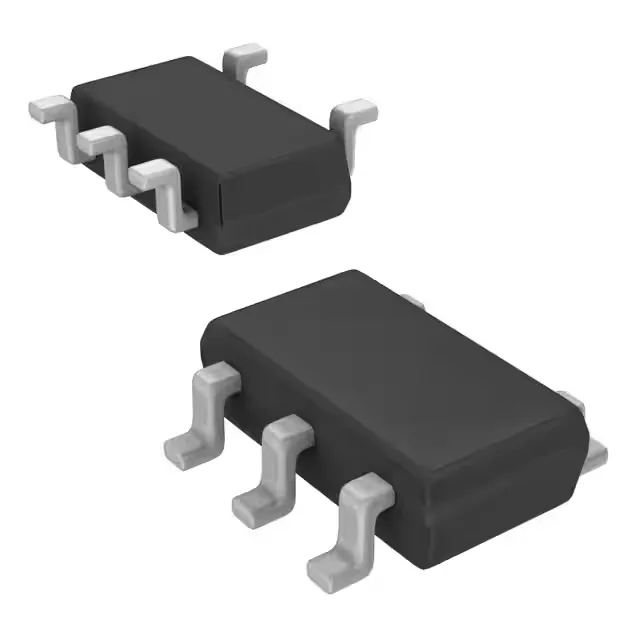
Housed in the thin SOT-23-5 (TSOT-23-5) package, the MAX1724EZK30+T occupies minimal board area—about 3×3 mm with the pads. The surface-mount footprint is standard for 5-pin SOT-23; no exotic land pattern required.