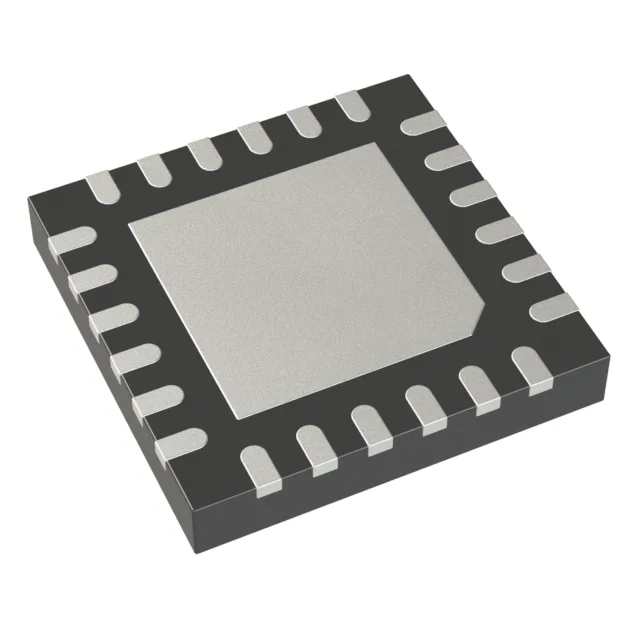
Analog Devices MAX15023ETG+T — Discrete Semiconductors

MAX15023ETG+T Dual Buck Controller, 4.5-28V, 24-TQFN

MPNMAX15023ETG+T
End of Life

Analog Devices MAX15023ETG+T dual-output step-down (buck) controller, 4.5V-28V input, 200kHz-1MHz switching, synchronous rectifier, 24-TQFN (4x4 mm) exposed pad, Tape & Reel.

$4.44Ref. price · indicative, final on quote
Packaging24-WFQFN Exposed Pad
RoHSROHS3 Compliant
Sourced new & surplus through independent channelsAuthenticity-screened · ESD-safe packingListing updated Aug 2026

Specifications

MAX15023ETG+T specifications
ParameterValue
Output typeTransistor Driver
MountingSurface Mount
Voltage - supply (Vcc (Vdd))4.5V ~ 28V
Frequency200kHz ~ 1MHz
I/O channels2
Output phases2
Duty cycle87.5%
Operating temperature-40°C ~ 85°C (TA)
PackageTape & Reel (TR); Cut Tape (CT)
FunctionStep-Down
TopologyBuck
Clock syncNo
Case24-WFQFN Exposed Pad
Control featuresCurrent Limit, Enable, Frequency Control, Power Good
Output configurationPositive
Synchronous rectifierYes

Product details

Dual-phase buck controller for 4.5–28 V rails

The MAX15023ETG+T: With two output phases and a synchronous rectifier driver, it targets point-of-load conversion in telecom, networking, and industrial equipment where efficiency and board density matter.

Switching frequency and duty cycle headroom

Synchronous rectification keeps the freewheeling diode drop out of the efficiency path — the external low-side FET replaces it, so the converter maintains high efficiency down to light loads.

Control features and temperature grade

On-chip control features include current limit, enable, frequency control, and power-good indication — enough to build a standalone regulator without an external supervisor.

Analog Devices lists the MAX15023ETG+T as Active in production, with ROHS3 compliance (RoHS exemption 7c-I for lead in glass/ceramic).

Frequently asked questions

Does the MAX15023ETG+T use synchronous rectification?

Yes, it includes a synchronous rectifier driver, which means an external low-side N-channel MOSFET replaces the freewheeling diode for higher efficiency.