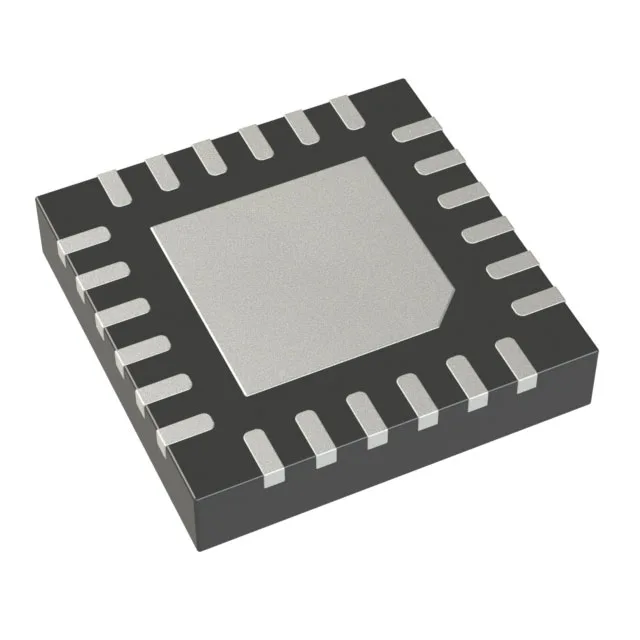
Analog Devices MAX14778ETP+T — Analog & Data Acquisition

MAX14778ETP+T Analog Devices 2× SP4T Analog Switch

MPNMAX14778ETP+T
End of Life

Analog Devices MAX14778ETP+T dual SP4T analog switch, 1.5 ohm max on-resistance, -103 dB crosstalk @ 100 kHz, 75 MHz -3 dB bandwidth, 3 V to 5.5 V single supply, 20-TQFN exposed pad, -40°C to 85°C.

$11.27Ref. price · indicative, final on quote
Packaging20-WQFN Exposed Pad
RoHSROHS3 Compliant
Independent supplier — new & surplus stockAuthenticity-screened · ESD-safe packingListing updated Aug 2026

Specifications

MAX14778ETP+T specifications
ParameterValue
MountingSurface Mount
Voltage - supply, single (V+)3V ~ 5.5V
Current - leakage (IS(off))1µA
Operating temperature-40°C ~ 85°C (TA)
-3db bandwidth75MHz
PackageTape & Reel (TR); Cut Tape (CT)
Crosstalk-103dB @ 100kHz
Case20-WQFN Exposed Pad
Switch circuitSP4T
Charge injection1720pC
Number of circuits2
On-State resistance1.5Ohm
Switch time (Ton, toff)2ms, 1.5ms
Multiplexer (Demultiplexer circuit)4:1
Channel capacitance (CS(off), CD(off))78pF

Product details

Dual SP4T analog switch for clean signal routing

The MAX14778ETP+T is a dual SP4T analog switch — two independent 4:1 multiplexer/demultiplexer circuits in a 20-TQFN package.

What the key ratings mean for your BOM

The 1.5 ohm max on-resistance keeps signal attenuation low. The -103 dB crosstalk at 100 kHz isolates adjacent channels.

Frequently asked questions

What is the closest pin-compatible alternative to MAX14778ETP+T?

No pin-compatible second source is listed in the available records. The part is a single-source Analog Devices design; for dual-sourcing, verify footprint compatibility with the 20-TQFN (5x5) package and the SP4T × 2 function against any alternate you evaluate.

What does the -103 dB crosstalk spec mean for my design?

At 100 kHz, -103 dB crosstalk means that a 1 Vpp signal on one channel couples less than 1 µVpp into an adjacent channel. This is sufficient for 16-bit audio or precision analog multiplexing where channel bleed-through must stay below the noise floor.