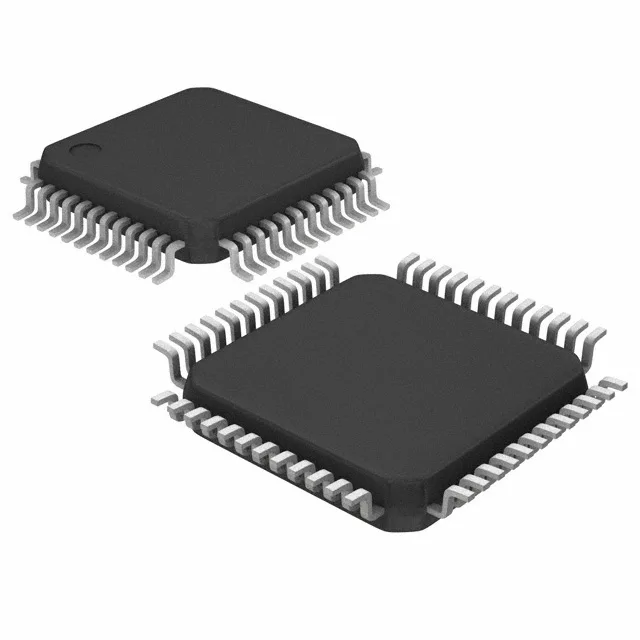
60 MSPS pipelined ADC — signal bandwidth and dynamic range
The MAX1420ECM+ is a 12-bit, 60 MSPS pipelined ADC from Analog Devices. The 60 MSPS sampling rate sets the Nyquist limit at 30 MHz for the input signal — this part digitizes IF or baseband signals up to that bandwidth without aliasing, given proper anti-alias filtering ahead of the input. 12-bit resolution provides a theoretical 72 dB SNR floor. For a receiver chain with a 6 dB noise figure, the ADC's own quantization noise sits below the front-end noise, so the system SNR is set by the analog gain stage, not the converter. The pipelined architecture delivers one conversion per clock cycle after the initial latency — no dead cycles between samples. This matters for burst-mode or continuous-sampling applications where sample-to-sample timing must be deterministic.
Input flexibility and supply isolation
The ADC accepts both differential and single-ended inputs. Differential drive rejects common-mode noise from the front-end amplifier or balun, which is the usual choice for IF sampling. Single-ended mode simplifies the drive circuit when the signal source is already ground-referenced and the noise environment is controlled. A ferrite bead between the two supplies is standard practice; the 330 mV analog tolerance keeps the internal reference stable.
ROHS3 compliant — no exemptions for lead in solder or any of the six restricted substances. This clears EU, UKCA, and most global BOM compliance gates without a waiver.