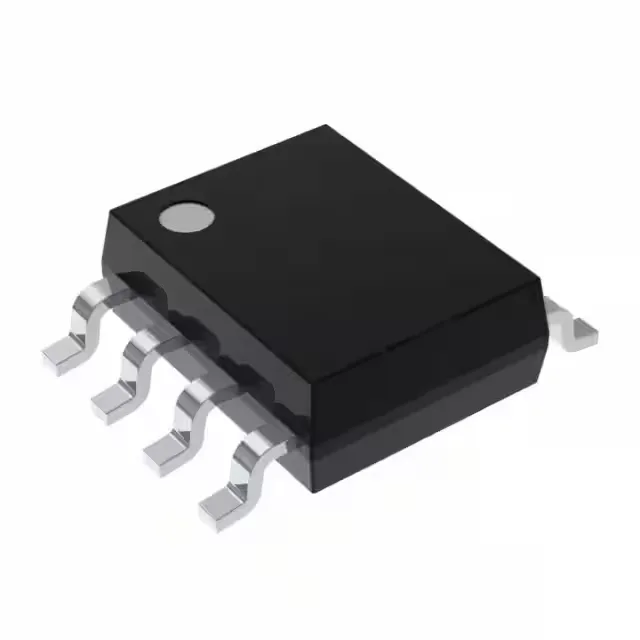
Analog Devices MAX13087EESA+ — Analog & Data Acquisition

MAX13087EESA+ RS-485/RS-422 Transceiver, 16 Mbps, 5V, SOIC-8

MPNMAX13087EESA+
End of Life

Analog Devices MAX13087EESA+, RS-422/RS-485 Transceiver, Full Duplex, 1/1 Drivers/Receivers, 16 Mbps, 4.5V to 5.5V Supply, 8-SOIC, -40°C to +85°C.

$6.33Ref. price · indicative, final on quote
Packaging8-SOIC (0.154", 3.90mm Width)
RoHSROHS3 Compliant
Independent supplier — new & surplus stockAuthenticity-screened · ESD-safe packingListing updated Aug 2026

Specifications

MAX13087EESA+ specifications
ParameterValue
TypeTransceiver
MountingSurface Mount
Supply voltage4.5V ~ 5.5V
ProtocolRS422, RS485
Operating temperature-40°C ~ 85°C
DuplexFull
PackageTube
Data rate16Mbps
Case8-SOIC (0.154\", 3.90mm Width)
Receiver hysteresis100 mV
Number of drivers (Receivers)1/1

Product details

The MAX13087EESA+ is a single-channel, full-duplex transceiver from Analog Devices (formerly Maxim Integrated).

The 16 Mbps data rate supports Profibus DP and Modbus RTU without bit-rate limiting. At this speed, cable length is typically limited to a few hundred meters.

Temperature grade and deployment environment

It is not qualified to AEC-Q100, so it is not the choice for under-hood automotive or powertrain applications, but it is a solid fit for factory-floor PLC I/O modules, motor drive communication ports, and building management gateways.

It is ROHS3 compliant (lead-free), which clears EU and RoHS-regulated markets without an exemption.

Frequently asked questions

What is the difference between MAX13087EESA+ and MAX13085EESA+?

The primary difference is data rate. The MAX13087EESA+ supports 16 Mbps, while the MAX13085EESA+ is a lower-speed variant. Both are full-duplex RS-485/RS-422 transceivers in the same SOIC-8 footprint, so they are pin-compatible. Choose the MAX13087EESA+ when your protocol requires higher baud rates; the MAX13085EESA+ may be adequate for slower fieldbuses like standard Modbus RTU at 115 kbps.

Can MAX13087EESA+ be used with 3.3V logic?

No, the MAX13087EESA+ requires a 4.5V to 5.5V supply. It is a 5V part. For 3.3V systems, look at the MAX13087EESA+ variant with a 3.3V supply option, or use a level translator between the transceiver and your 3.3V logic.