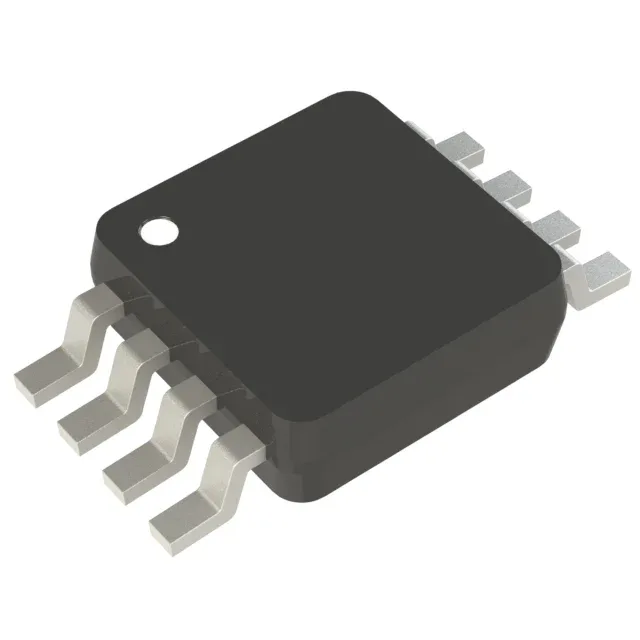
Analog Devices LTC6930CMS8-4.19#PBF — Clock & Timing ICs

LTC6930CMS8-4.19#PBF Silicon Oscillator 4.194304MHz 8-MSOP

MPNLTC6930CMS8-4.19#PBF
End of Life

Analog Devices LTC6930CMS8-4.19#PBF, Silicon Oscillator, 4.194304 MHz, 490 µA supply, 1.7V-5.5V range, 8-MSOP, Active production.

$3.44Ref. price · indicative, final on quote
Packaging8-TSSOP, 8-MSOP (0.118", 3.00mm Width)
RoHSROHS3 Compliant
Sourced new & surplus through independent channelsAuthenticity-screened · ESD-safe packingListing updated Aug 2026

Specifications

LTC6930CMS8-4.19#PBF specifications
ParameterValue
TypeOscillator, Silicon
MountingSurface Mount
Voltage1.7V ~ 5.5V
Current - supply490 µA
Frequency4.194304MHz
Operating temperature0°C ~ 70°C
PackageTube
Case8-TSSOP, 8-MSOP (0.118\", 3.00mm Width)

Product details

Active silicon oscillator at 4.194304 MHz — BOM-fit for low-power timing

The LTC6930CMS8-4.19#PBF is an Analog Devices silicon oscillator delivering a fixed 4.194304 MHz output from a 1.7V to 5.5V supply while drawing only 490 µA typical.

Supply range and current — sizing for battery and low-dropout rails

The 1.7V to 5.5V supply range lets the oscillator run directly from a Li-ion cell or a 3.3V / 5.0V regulated rail without an extra LDO. At 490 µA supply current, the part adds negligible overhead to the system power budget — a meaningful advantage over a crystal-plus-inverter solution that can draw several milliamps.

Package and footprint — 8-MSOP for dense layouts

Surface-mount assembly with MSL (moisture sensitivity level) typical for this package class — no special bake required before reflow if the floor life is respected.

ROHS3 compliant.

Frequently asked questions

Is LTC6930CMS8-4.19#PBF compatible with 3.3V logic?

Yes. The supply range of 1.7V to 5.5V covers 3.3V operation directly. The oscillator output swings rail-to-rail, so at a 3.3V supply the output is 3.3V logic-compatible.

Can LTC6930CMS8-4.19#PBF replace LTC6930CMS8-4.00#PBF?

No — the output frequencies differ (4.194304 MHz vs 4.00 MHz). The parts are pin-compatible and share the same package, but the frequency change will affect any timing-dependent logic (UART baud rates, timer periods). Verify that 4.194304 MHz meets your system timing budget before substituting.