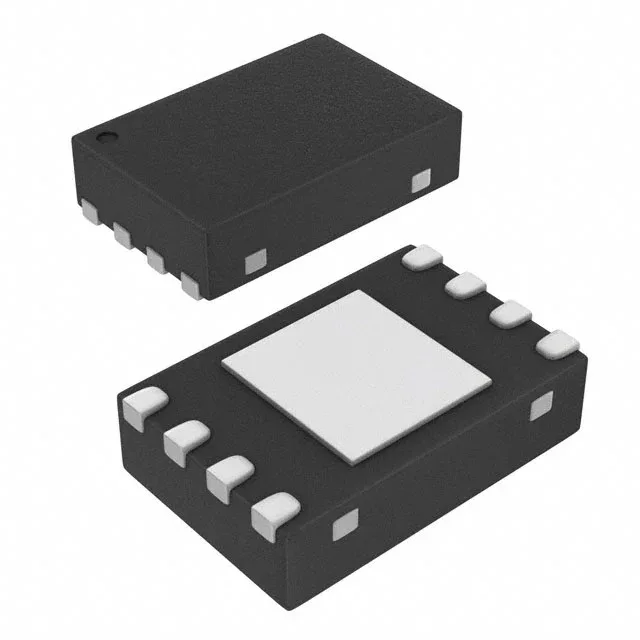
Analog Devices LTC6930CDCB-8.00#TRMPBF — Clock & Timing ICs

LTC6930CDCB-8.00#TRMPBF Silicon Oscillator, 8 MHz, 1.7-5.5V

MPNLTC6930CDCB-8.00#TRMPBF
End of Life

Analog Devices LTC6930 series silicon oscillator, 8 MHz fixed frequency, 8-WFDFN exposed pad package, 1.7V to 5.5V supply, 926 µA supply current, 0°C to 70°C operating temperature.

$2.91Ref. price · indicative, final on quote
Packaging8-WFDFN Exposed Pad
RoHSROHS3 Compliant
Independent supplier — new & surplus stockAuthenticity-screened · ESD-safe packingListing updated Aug 2026

Specifications

LTC6930CDCB-8.00#TRMPBF specifications
ParameterValue
TypeOscillator, Silicon
MountingSurface Mount
Supply voltage1.7V ~ 5.5V
Current - supply926 µA
Frequency8MHz
Operating temperature0°C ~ 70°C
PackageTape & Reel (TR); Cut Tape (CT)
Case8-WFDFN Exposed Pad

Product details

8 MHz silicon oscillator, 1.7-5.5 V supply

The LTC6930CDCB-8.00#TRMPBF is a fixed-frequency silicon oscillator from Analog Devices, delivering an 8 MHz clock output without requiring an external crystal or resonator. Housed in an 8-lead WFDFN exposed pad package (2×3 mm DFN), this surface-mount oscillator suits space-constrained designs where a clean, stable clock source is needed without the mechanical fragility of a quartz crystal.

At 926 µA supply current (typical), the LTC6930CDCB-8.00#TRMPBF is a low-power option for battery-powered or always-on subsystems where every microamp matters — the oscillator's own draw is comparable to the sleep-mode current of many MCUs.

Frequently asked questions

Where can I buy LTC6930CDCB-8.00#TRMPBF and get a price quote?

The LTC6930CDCB-8.00#TRMPBF is sourced to order through independent distribution.

What is the difference between LTC6930CDCB-8.00#TRMPBF and LTC6930CDCB-5.00#TRMPBF?

The two parts share the same package, supply voltage range, and temperature grade. The only difference is the output frequency: 8 MHz for the LTC6930CDCB-8.00#TRMPBF versus 5 MHz for the LTC6930CDCB-5.00#TRMPBF. They are pin-compatible — a board designed for one can accept the other without layout changes, provided the downstream logic tolerates the frequency difference.