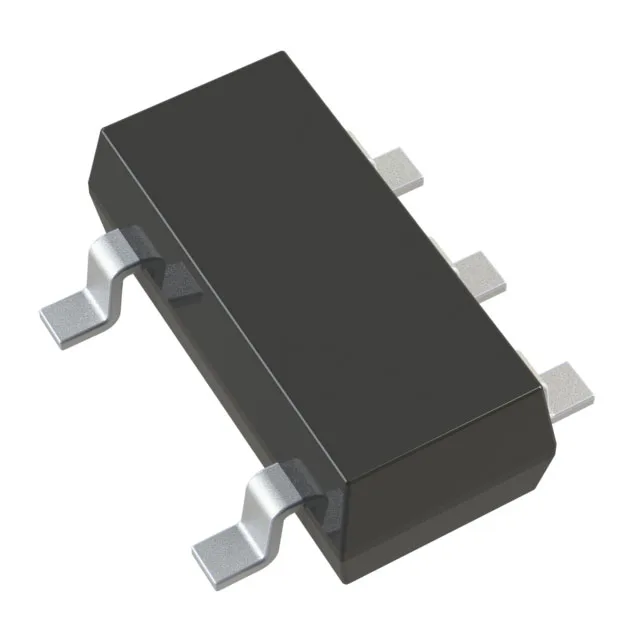
Analog Devices LTC6905HS5-80#TRMPBF — Clock & Timing ICs

LTC6905HS5-80#TRMPBF Analog Devices Silicon Oscillator 80

MPNLTC6905HS5-80#TRMPBF
End of Life

Analog Devices LTC6905HS5-80#TRMPBF, Silicon Oscillator, 80 MHz, 7 mA, 2.7 V to 5.5 V, TSOT-23-5, -40°C to 125°C

$5.75Ref. price · indicative, final on quote
PackagingSOT-23-5 Thin, TSOT-23-5
RoHSROHS3 Compliant
Sourced new & surplus through independent channelsAuthenticity-screened · ESD-safe packingListing updated Aug 2026

Specifications

LTC6905HS5-80#TRMPBF specifications
ParameterValue
TypeOscillator, Silicon
MountingSurface Mount
Voltage2.7V ~ 5.5V
Current - supply7 mA
Frequency80MHz
Operating temperature-40°C ~ 125°C
PackageTape & Reel (TR); Cut Tape (CT)
CaseSOT-23-5 Thin, TSOT-23-5

Product details

80 MHz silicon oscillator in a 5-pin TSOT-23-5

The LTC6905HS5-80#TRMPBF is a fixed-frequency silicon oscillator delivering 80 MHz from a single resistor-free configuration. The output is a rail-to-rail square wave, so it drives CMOS clock inputs directly without an external buffer.

Analog Devices lists the LTC6905HS5-80#TRMPBF as Active. The part is ROHS3 compliant. For volume commitments, we source against your BOM quantity and confirm lead time at quote — no stock-holding claim, no deferred delivery.

Package and footprint — TSOT-23-5

The TSOT-23-5 package is a thin SOT-23 with a 0.95 mm pitch. It fits a standard SOT-23-5 land pattern; the reduced body height (1.0 mm max) helps in mezzanine or card-edge assemblies where clearance is tight.

Frequently asked questions

Can I substitute the LTC6905HS5-80#TRMPBF with a different package variant?

If your application stays below 85°C, that part saves cost.

What is the closest functional second-source to the LTC6905HS5-80#TRMPBF?

The LTC6905HS5-100#TRMPBF is the same silicon oscillator family at 100 MHz. It shares the same supply range, package, and temperature grade. If your clock tree can tolerate the frequency difference, it is a drop-in replacement for the footprint but not for the timing — the output period changes by 25%.