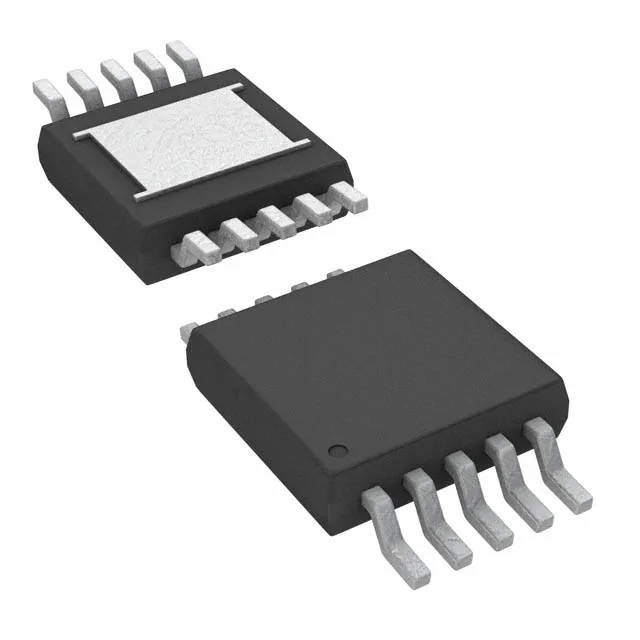
Multi-topology controller for isolated and non-isolated designs
The LTC3805IMSE-5#TRPBF: This is a current-mode switching controller that supports boost, flyback, and SEPIC topologies — a single part covers step-up and step-up/step-down conversion. The output configuration is positive and isolation-capable, meaning it can drive the primary side of a flyback transformer with an optocoupler feedback loop. The switching frequency is programmable from 70 kHz to 700 kHz, and the part includes a clock sync input (SYNC) for aligning the switching edge with an external clock — useful when multiple converters must share a common switching frequency to avoid beat-frequency noise.
Supply range, duty cycle, and temperature grade
The controller operates from a 3.95 V to 9.5 V Vcc supply, with an 80% maximum duty cycle. The single transistor-driver output (one phase) drives an external N-channel MOSFET; no synchronous rectifier is built in, so the design uses a diode on the secondary side.
Control features and package format
Built-in control features include an enable pin for shutdown and a soft-start pin that programs the output ramp-up time, preventing inrush current on startup.