1.8V fixed rail with 74 dB PSRR — the noise floor decision
The LT3065EMSE-1.8#PBF is a single-output positive LDO regulator delivering a fixed 1.8V at up to 500 mA from a 45 V maximum input rail. Its 74 dB power-supply rejection ratio at 120 Hz means that 120 Hz ripple on the input bus — from a line-frequency rectifier or a switching pre-regulator — is attenuated by a factor of roughly 5000 before it reaches the output. For an analog front-end or a precision ADC reference supply, that is the difference between a clean 1.8 V rail and one that carries audible-frequency noise into the signal chain. Below that, the output follows the input minus dropout, and the PSRR collapses. For a 3.3 V bus feeding this LDO, there is roughly 1 V of margin — comfortable for most designs, but a 2.5 V input rail would leave only 0.19 V of headroom, which is below the dropout spec.
Active production — no end-of-life clock ticking
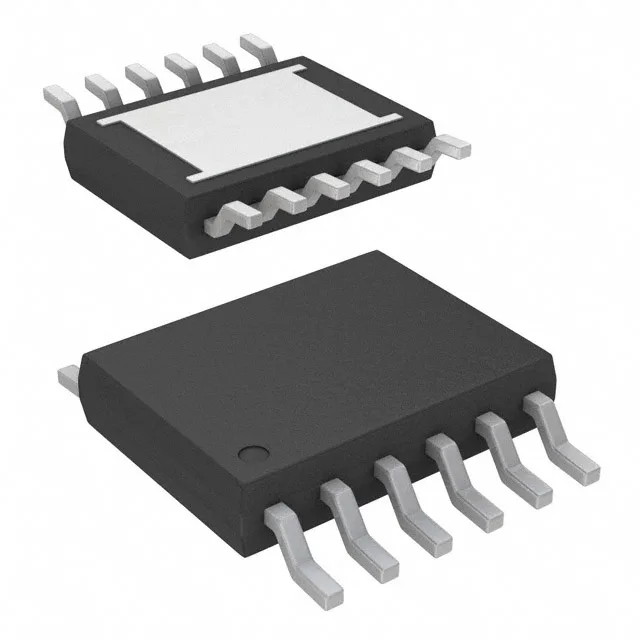
ROHS3 compliant per, with no exemption expiry to track. The 12-MSOP-EP package (exposed pad) is a standard footprint for this current class. In a reflow profile, the pad sees the same peak temperature as the leads; no special bake or handling beyond the MSL rating typical for MSOP packages.
Protection and control — what the on-chip supervisor handles
Over-current, over-temperature, and reverse-polarity protection are built in — the LDO survives a shorted output or a reverse-battery event without external clamp diodes on the input, provided the input voltage stays within the 45 V abs-max. The power-good flag asserts when the output is within regulation, which can drive a reset line or enable a downstream converter. The quiescent current is 110 µA typical, rising to 25 mA maximum under full load — the 25 mA figure is the supply current drawn by the internal bias and drive circuits, not the output current. For always-on rails in battery-powered equipment, the 110 µA Iq is the standby overhead; the 25 mA max is the worst-case when the output is sourcing 500 mA and the dropout is near its limit. The 125°C junction limit means the part can sit in an engine bay or a hot enclosure as long as the thermal resistance of the board keeps the junction below that ceiling at full load. Derating the output current above 85°C ambient is typical for a 12-MSOP-EP package on a standard 2-layer board.