Dropout voltage and the headroom decision
The LT3050MPMSE#PBF: Maximum dropout is 0.55 V at the full 100 mA load. For a 3.3 V output rail, the input needs to hold above 3.85 V worst-case — a 5 V rail with a Schottky diode drop still has margin; a 3.6 V rail from a li-ion cell near end-of-discharge does not. The adjustable output spans 0.6 V to 44.5 V from a 45 V maximum input. That 44.5 V ceiling means the LDO can generate a clean 24 V or 36 V rail from a 48 V telecom bus without needing a separate preregulator.
The 85 dB power-supply rejection ratio at 120 Hz is the figure that matters for circuits powered from a full-wave rectified and lightly filtered DC bus. The 120 Hz ripple from the mains rectifier sits right at this frequency, and 85 dB of rejection knocks a 1 Vpp ripple down to roughly 56 µV at the output — clean enough for a precision analog front-end or a VCO supply. Above a few kilohertz the PSRR rolls off, so a switching preregulator upstream still needs its own output filter before this LDO.
Protection features and quiescent draw
Overcurrent, overtemperature, and reverse polarity protection are built in — the LDO survives a shorted output, a thermal runaway condition, or a reversed input connection without external clamp diodes. The 90 µA quiescent current (5.2 mA max supply current) keeps the idle draw low enough for always-on rails in battery-backed systems, though the 5.2 mA maximum is worth checking against a tight sleep budget if the enable pin is not used to shut down the regulator.
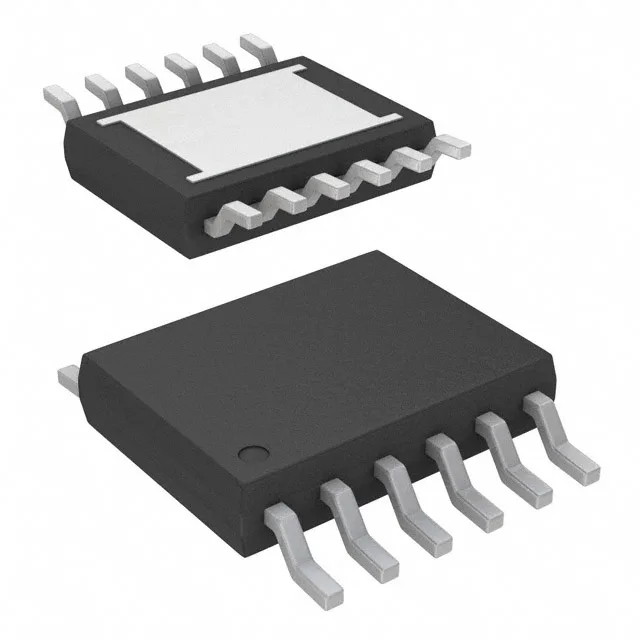
The 12-TSSOP exposed-pad package (0.118-inch body width, 3.00 mm) uses the standard 12-MSOP-EP land pattern. The tube packaging is fine for prototype and low-volume builds; for reel quantities the order code suffix changes.