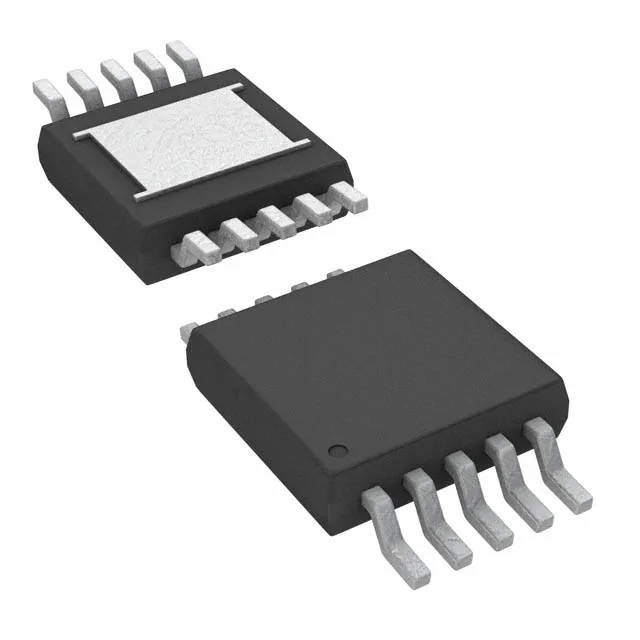
Dual 100 mA LDO in a 10-MSOP-EP footprint
The LT3023EMSE#TRPBF packs two 100 mA adjustable positive LDOs into a 10-MSOP-EP package with an exposed thermal pad — the kind of part you reach for when a board has two quiet analog rails and the layout engineer is fighting for every square mm. Each output is independently adjustable from 1.22 V up to 20 V, matching the maximum input rail. Dropout is 0.45 V max at full load on both channels — the headroom between the input rail and the set output voltage must stay above that across the load range, or the output falls out of regulation. That 0.45 V figure is the worst-case number, so budget for it in the rail-stack calculation.
PSRR — 65 dB at 120 Hz and what it means on the bench
PSRR is listed at 65 dB at 120 Hz — that is the ripple rejection at the fundamental of a full-wave rectified mains supply. For a 1 Vpp ripple on the input at 120 Hz, the output sees roughly 0.56 mVpp of that ripple. Above 120 Hz the rejection rolls off, so if the upstream rail carries switching noise at 100 kHz or higher, the attenuation is significantly less — plan a post-filter if the load is an ADC reference or a VCO supply.
Protection set and control interface
Built-in overcurrent, overtemperature, and reverse polarity protection — the scorch mark tells you when the overcurrent limit saved the load, but the overtemperature trip is the one that cycles if the thermal pad isn't soldered to a copper plane. The enable pin on each regulator lets you sequence the rails: pull it low to shut down the output, high to enable. No sequencing delay is specified, so the power-up order is determined by the RC time constant on the enable pin.