Active production — what that means for your BOM line
The LT3015EMSE-5#PBF: ROHS3 compliant, so no RoHS exemption paperwork needed for EU-market builds.
Negative rail at 1.5A — the dropout and thermal reality
The LT3015EMSE-5#PBF is a negative-output LDO delivering a fixed -5V at up to 1.5A. Maximum input voltage is -30V, giving plenty of headroom for unregulated negative supplies from -6V up to -30V. Quiescent current is 2.4 mA typical — not an ultra-low-power figure, but reasonable for a 1.5A-capable LDO powering an always-on analog rail.
PSRR at line frequency — what 58dB buys you
PSRR is 58dB at 120Hz — this is the ripple rejection you get from a full-wave rectified line-frequency supply. For a 1V pk-pk ripple at 120Hz on the input, the output sees roughly 1.6 mV pk-pk. That is clean enough for most analog front-ends running off a -5V rail, but if your load current steps hard, the transient response will add its own excursion on top. The -40°C to 125°C operating range covers automotive under-hood and industrial enclosure environments. The dropout voltage and output accuracy will shift across that range — budget the 0.5V max dropout at the hot end.
Package and board-fit for the rework bench
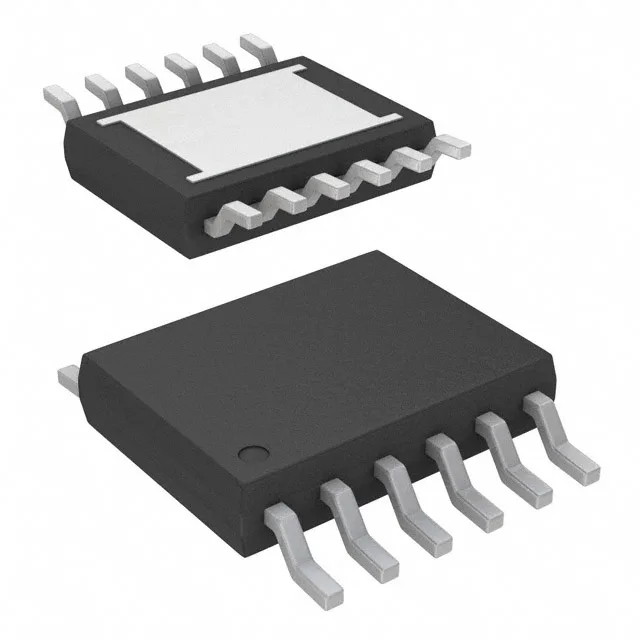
12-TSSOP with exposed pad (0.118-inch / 3.00mm width), supplier device package is 12-MSOP-EP. The pad is on the bottom of the package, so the board footprint needs a matching copper area and via array to the ground plane. Tube packaging — these come in a standard anti-static tube, not tape-and-reel. Fine for prototype or low-volume rework; for production pick-and-place you will want the tape-and-reel variant (LT3015EMSE-5#TRPBF).
Protection features — what is built in, what is not
Built-in protection covers over-current, over-temperature, and reverse polarity on the input. The reverse polarity protection is particularly useful on a negative rail — if the input gets connected backwards, the regulator survives without an external series diode. An Enable pin is provided for sequencing or shutdown control. No soft-start or current-foldback is mentioned in the spec set — the over-current protection is likely a constant-current limit, so the output voltage will collapse under severe overload rather than latch off.