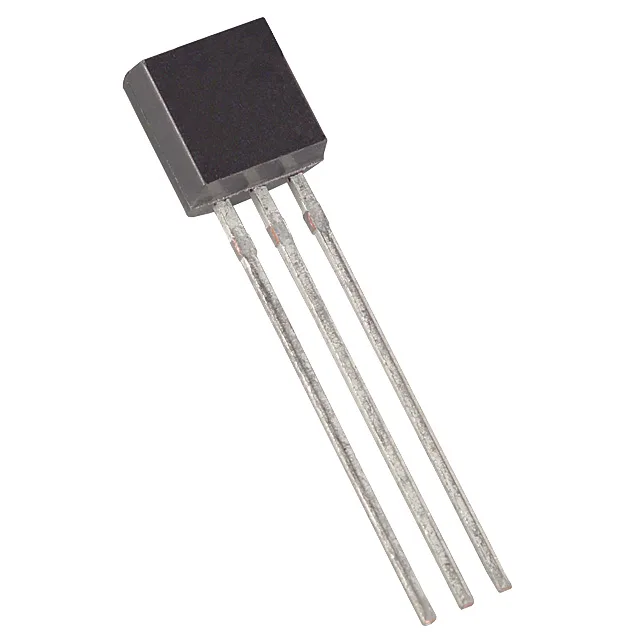
It monitors a 5V rail and asserts a reset signal when the supply drops below 4.35V, holding reset for a minimum of 100ms after the rail recovers. The active-low, open-drain output can be pulled up to any voltage up to the absolute maximum, making it compatible with 3.3V or 5V logic without a level shifter. Typical applications include microcontroller reset generation, power-up sequencing, and brownout detection in industrial controls, telecom equipment, and embedded systems where a simple, reliable supervisor is needed.
4.35V threshold — what it means for a 5V rail
The 4.35V threshold is set to detect a brownout on a nominal 5V supply before the downstream logic starts misbehaving. For a 5V ±5% rail, the threshold sits below the 4.75V minimum, so normal tolerance won't trigger a false reset. But if the supply sags to 4.35V or lower, the DS1813-10+ pulls the reset line low and holds it for at least 100ms after the rail returns above the threshold.
Open-drain output and active-low reset
The open-drain output means the DS1813-10+ can only pull the reset line low; it cannot drive it high. This topology allows multiple open-drain outputs to be wire-ORed on the same reset line, which is useful when several supervisors or watchdog timers share a common reset. The active-low convention matches the reset input of most MCUs and MPUs.
Housed in a TO-92-3 through-hole package, the DS1813-10+ is suited for prototyping, low-volume production, or designs where hand-assembly is preferred. The through-hole package also simplifies rework and field replacement compared to surface-mount alternatives.
There is no last-time-buy risk at this time.