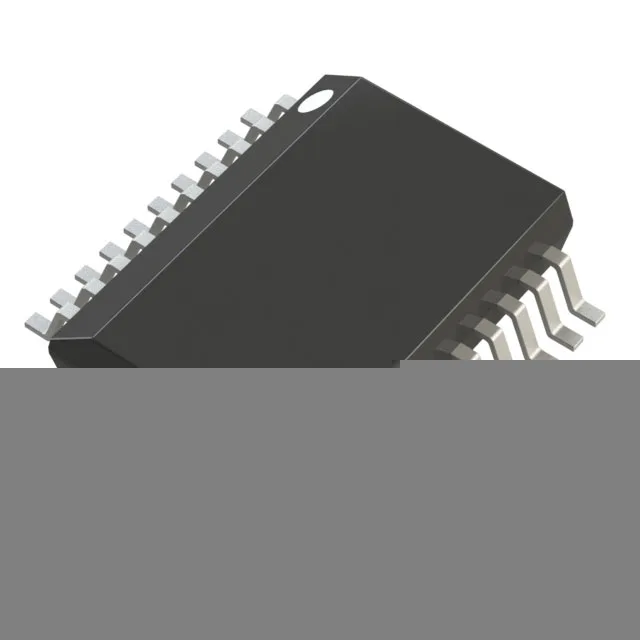
What this iCoupler does on the board
The Analog Devices ADUM3471ARSZ-RL7 is a 4-channel, general-purpose digital isolator from the iCoupler family, using magnetic coupling to pass signals across a 2500 Vrms isolation barrier at up to 1 Mbps. It gives you three channels going one way and one channel going the other way — a 3/1 input split — which fits the common pattern of a UART or SPI bus with a single feedback or enable line. The 25 kV/µs common-mode transient immunity means it holds its state through the fast voltage swings you get in motor drives or inverter legs, not just clean logic-level environments.
1 Mbps at 100 ns propagation delay — what that buys you
The 2.5 ns typical rise/fall time keeps the signal edges clean enough that you won't need a Schmitt trigger on the receiving side for traces under a few inches. If your design needs to push data faster — say 10 Mbps or more — you'd be looking at a different iCoupler variant; this one is sized for the 1 Mbps tier where margin on the bus is more important than raw speed.
Supply rails and temperature range — field-fit check
That lets you bridge a 3.3 V microcontroller domain to a 5 V peripheral or sensor interface without a level shifter. The 20-SSOP package is a surface-mount footprint with 0.65 mm pitch, reworkable with a fine-tip iron if you're careful, though a hot-air station is cleaner for removal.
No isolated power — plan your secondary-side rail
This isolator does not include an integrated isolated DC-DC converter — the 'No' under Isolated Power means you need to supply both sides separately. For a typical 3.3 V to 5 V bridge, that's two small LDOs or a single isolated module feeding the secondary side. If your board already has a 5 V rail on the isolated domain, you're set. If you need a part that generates its own secondary-side power, look at the iCoupler parts with integrated iso-power (the ADuM5xxx series); those save you a separate converter but come in different channel counts and packages.