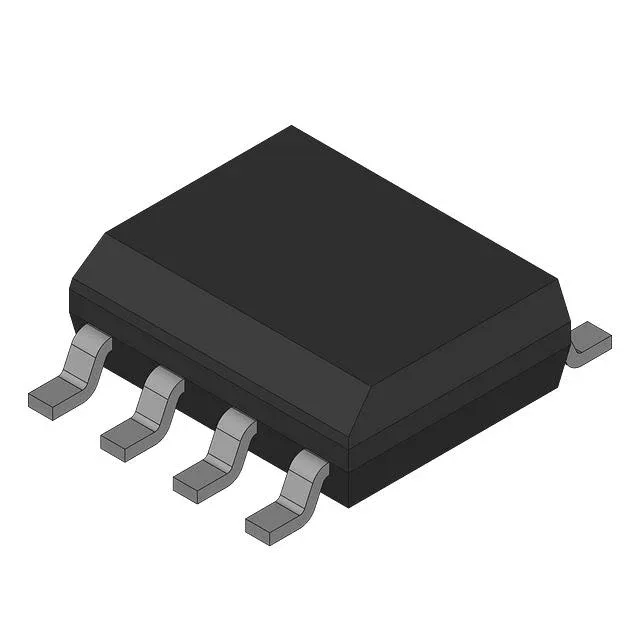
Active production, no second-source drama
The ADM1032ARZ-REEL: It's a ±1°C remote temperature sensor with SMBus output, meaning it reads the die temp of a remote diode (like a CPU or FPGA thermal diode) plus its own local temp, and reports both over a two-wire bus. The 1°C accuracy is the headline number that matters for thermal management loops — every degree of error shifts the fan curve or throttle point. The package is Bulk — no reel, no tape. The buyer getting a handful of prototypes or a small production run doesn't pay for carrier tape they'll throw away.
What the DS75LVS cross-reference actually means
The DS75LVS is a functional peer — both are digital temp sensors with SMBus/I2C interfaces — but they are not pin-compatible drop-ins. The ADM1032 supports remote diode sensing (two-channel: local + remote), while the DS75LVS is local-only. If your BOM calls for monitoring a processor's thermal diode, the DS75LVS won't do it; you need the ADM1032's remote channel. The ADM1032ARZ-1 is the same die but a different order code — likely a packaging or test-program variant. The ADM1032ARM-REEL7 is the same sensor in an MSOP package instead of the SOIC footprint of the ARZ suffix. Board layout engineers: the ARZ is SOIC-8; the ARM is MSOP-8. They are not footprint-compatible without a layout change.