Slew rate and bandwidth — what they mean for signal chain design
A 210 V/µs slew rate means this part can swing a 10 V peak-to-peak output in under 48 ns — fast enough for video line drivers, ADC input buffers, and pulse amplifier stages without slew-induced distortion. The 90 MHz -3 dB bandwidth supports small-signal amplification up to the low VHF range; pair it with the 105 MHz gain-bandwidth product to estimate closed-loop bandwidth at a given gain. For a gain of 10, expect roughly 10 MHz of usable small-signal bandwidth.
Each channel can deliver 125 mA, enough to drive a 50 Ω back-terminated video line or a moderate headphone load directly.
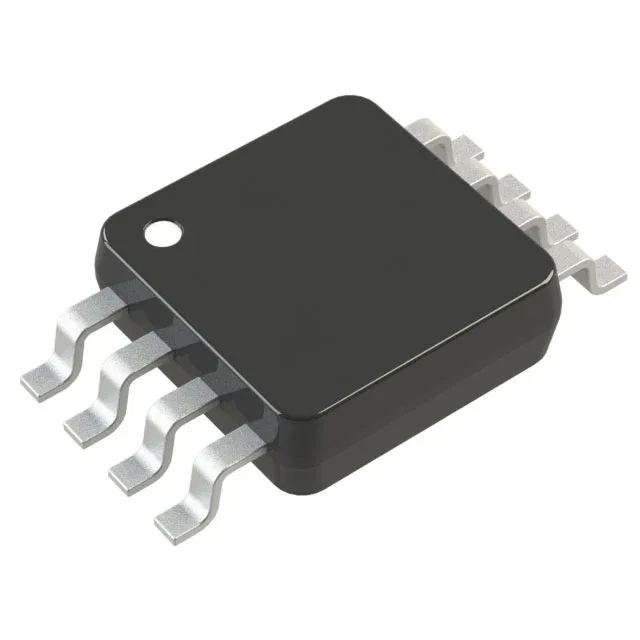
The same die is also available in an 8-SOIC package (ADA4891-2ARZ-RL) for designs needing a wider body or better thermal dissipation through the SOIC footprint.
It is ROHS3 compliant. For dual-sourcing flexibility, the pin-compatible ADA4891-2ARZ-RL (SOIC-8 package) is a validated alternate; the parametric core (slew rate, bandwidth, supply range) is identical.