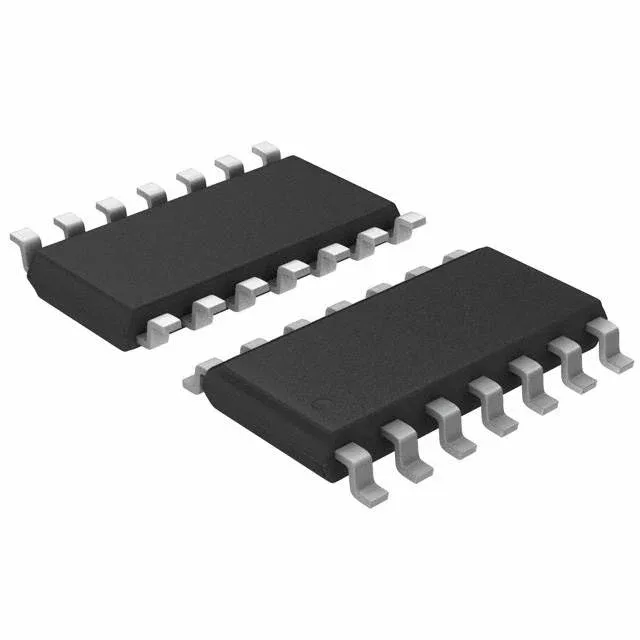
Analog Devices AD8648ARZ — Analog & Data Acquisition

AD8648ARZ Quad Rail-to-Rail Op-Amp, 24 MHz, 11 V/µs

MPNAD8648ARZ
End of Life

Analog Devices AD8648ARZ, quad general-purpose op-amp, 24 MHz gain bandwidth, 11 V/µs slew rate, rail-to-rail output, 14-SOIC package, -40°C to 125°C, Tube.

$3.46Ref. price · indicative, final on quote
Packaging14-SOIC (0.154", 3.90mm Width)
RoHSROHS3 Compliant
Independent supplier — new & surplus stockAuthenticity-screened · ESD-safe packingListing updated Aug 2026

Specifications

AD8648ARZ specifications
ParameterValue
Output typeRail-to-Rail
MountingSurface Mount
Amplifier typeGeneral Purpose
Voltage - input offset600 µV
Voltage - supply span5.5 V
Current - supply1.5mA (x4 Channels)
Current - input bias0.3 pA
Current - output (Channel)120 mA
Operating temperature-40°C ~ 125°C
Gain bandwidth product24 MHz
PackageTube
Slew rate11V/µs
Case14-SOIC (0.154\", 3.90mm Width)
Number of circuits4

Product details

The AD8648ARZ is a quad general-purpose op-amp with 24 MHz gain-bandwidth product and 11 V/µs slew rate across four channels. Rail-to-rail output and 120 mA per-channel output current allow driving heavier loads than typical op-amps.

Package and mounting — 14-SOIC, surface-mount, Tube

Supplied in Tube (not Tape & Reel by default), surface-mount 14-SOIC. The 0.154" width is the narrow SOIC body — verify your pick-and-place feeder setup if converting from wide-body SOIC. No special thermal pad; junction-to-ambient thermal resistance follows the standard SOIC-14 profile.

The 24 MHz gain-bandwidth product and 11 V/µs slew rate define the small-signal and large-signal bandwidth. Input offset voltage is 600 µV typical. Supply current is 1.5 mA per channel.

Frequently asked questions

What is the closest functional alternative to AD8648ARZ?

The AD8646ARZ is the two-channel version of the same core — same 24 MHz GBW, 11 V/µs slew rate, 0.3 pA input bias, and 120 mA output. If you need four channels in the same footprint, the AD8648ARZ is the part; the AD8646ARZ gives two channels in a smaller package for lower channel-count designs.