72 macrocells at 10 ns — what the delay means for the firmware engineer
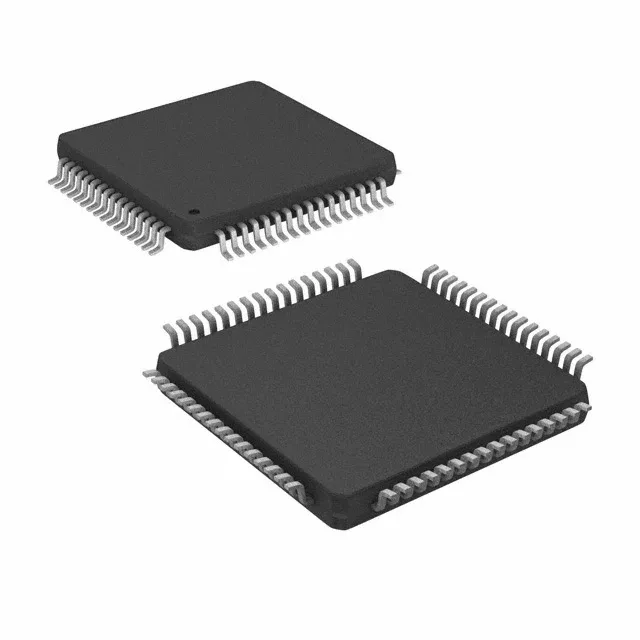
The XC9572XL-10VQG64I: Its headline spec is a 10 ns pin-to-pin propagation delay (tpd) — this means combinatorial logic paths settle within one 100 MHz clock period, so a state machine or glue-logic decode that crosses the chip in a single cycle has 10 ns of budget before the next clock edge. For the firmware bring-up engineer, that 10 ns window sets the timing closure floor: any path exceeding it must be pipelined or split across two macrocells.
52 I/O and 1600 gates — board-fit for the layout engineer
52 user I/O are available in a 64-VQFP (10x10 mm) package — the 0.50 mm pitch demands a 4-layer board for clean fan-out of the inner rows, though the outer two rows break out on two layers if the routing is short. The 1600 usable gates map to the 72 macrocells; each macrocell can be configured as combinatorial or registered logic.
Within the XC9500XL family, the -10 speed grade (10 ns tpd) sits between the -7 (7 ns, faster) and -15 (15 ns, slower) variants. The -10 is the most commonly stocked speed bin — it meets 100 MHz logic without the premium of the -7 grade. For a BOM cost engineer, the -10 is typically the price/performance sweet spot in this family; the -7 adds cost for timing margin that most glue-logic designs do not need.