What 23,360 logic cells and 1.6 Mbit block RAM mean for a motor-drive control loop
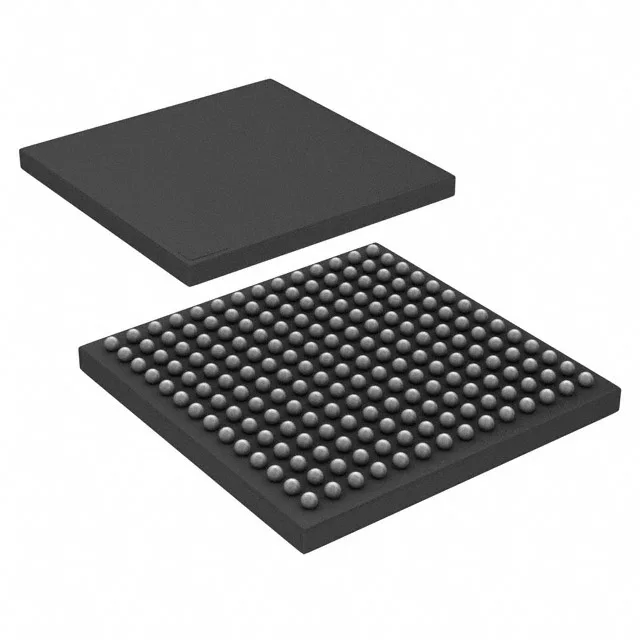
The XC7S25-L1FTGB196I packs 23,360 logic elements and 1,658,880 total RAM bits in a Spartan-7 fabric — enough headroom to run a dual-axis servo position loop with a S-curve profile and still leave logic for encoder decoding and fault handling. The block RAM holds the look-up tables for the commutation angle, so the core doesn't stall fetching from external memory each cycle. With 100 user I/O, this 196-CSBGA (15x15 mm) part can interface to parallel ADCs on the current-sense bus, a quadrature encoder interface, and a SPI flash for configuration — all without multiplexing the pins. The 0.92 V to 0.98 V core supply keeps dynamic power under 1 W typical at full utilisation, which matters when the FPGA sits next to a hot IGBT module on the same board.
Industrial temperature grade and active lifecycle — what a repair bench needs to know
The 0.92 V to 0.98 V supply rail is tight; a 3% regulator holds it within spec across the temperature range. No last-time-buy or NRND flags — it's still a valid choice for new designs. Sourced through independent distribution; availability and current pricing confirmed at RFQ. The scorch mark on a dead board tells you which rail failed, not the FPGA itself — this part usually survives unless the core supply overshoots.
Package and board-fit for the rework bench
The 196-CSBGA (15x15 mm) package has a 0.80 mm ball pitch — standard for a 4-layer PCB with via-in-pad. The exposed paddle on the underside needs a thermal via array to the ground plane; without it the junction-to-board thermal resistance climbs and the 100°C limit gets tighter.