Logic fabric and memory budget
The XC7A15T-1FTG256C is a Xilinx Artix-7 FPGA with 16640 logic cells arranged in 1300 CLBs. That cell count places it in the lower-mid range of the Artix-7 family — enough for a modest glue-logic consolidation or a lightweight soft-core controller, but not for a full video pipeline. On-chip block RAM totals 921600 bits, which works out to about 112 KB of distributed memory. For a design that needs a small frame buffer, a FIFO, or coefficient storage, that is usable headroom; anything larger requires an external SRAM or SDRAM controller in the fabric.
I/O and package — what the 256-FTBGA demands
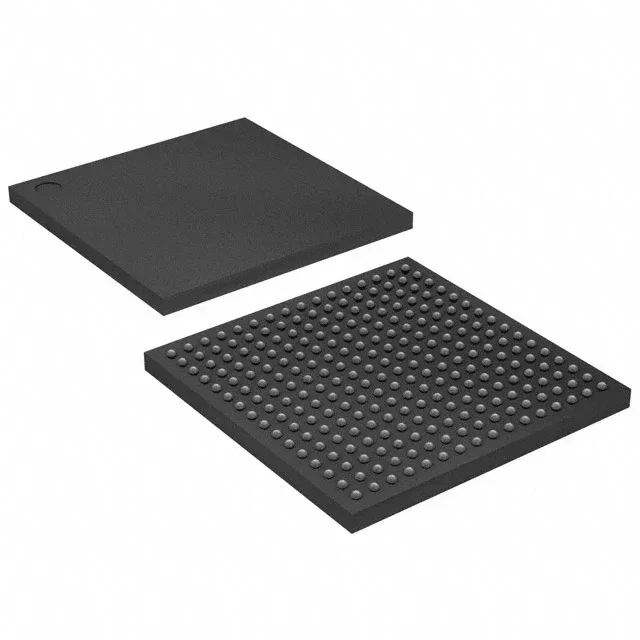
170 user I/O are available, all routed to the 256-ball FTBGA package with a 17x17 mm body and 1.0 mm ball pitch. The 1.0 mm pitch is forgiving for a 4-layer board — fan-out traces between balls without microvias, though the inner rows still need a via-in-pad or dog-bone breakout depending on the layer stack. Core supply is 0.95 V to 1.05 V, so a dedicated 1.0 V rail is required. The I/O banks support 1.2 V to 3.3 V standards, but the core voltage tolerance is tight — a 50 mV droop on the 1.0 V rail can shift timing margins. A local LDO or a switching regulator with < 10 mV ripple is the typical choice. Temperature grade is commercial: 0°C to 85°C junction. That covers most indoor and telecom equipment, but not automotive or extended-industrial ambient above 70°C. For a fan-cooled chassis or a controlled environment it is fine; for a sealed enclosure near a motor drive, the -1I speed grade (industrial) would be the safer pick.