Logic density and on-chip memory
The XC6SLX9-2FTG256I packs 9152 logic cells across 715 CLBs — enough for a soft-core microcontroller, a few serial interfaces, and glue logic in a single device. The 589824 bits of block RAM give you about 72 KB of dedicated memory for FIFOs or small frame buffers, which keeps external SRAM off the BOM on simpler designs.
I/O and package — what the 256-FTBGA means at the bench
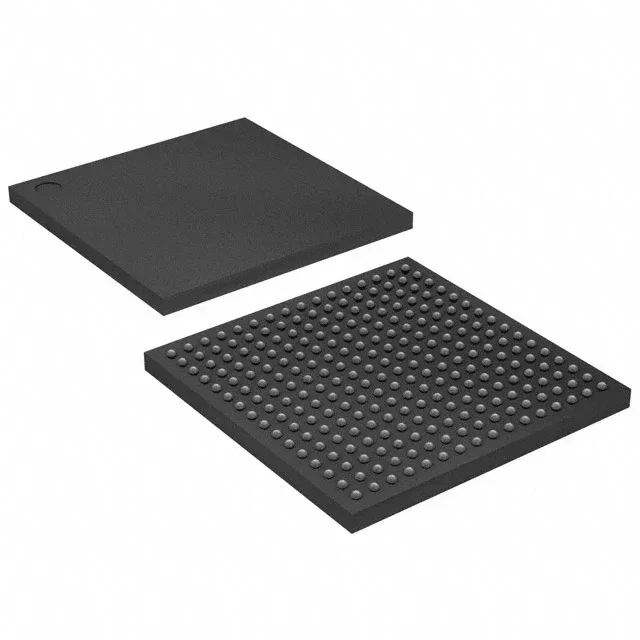
186 user I/O brought out to a 256-ball FTBGA, 17x17 mm body. That's a 1.0 mm ball pitch — hand-reworkable with a decent hot-air station and a stencil, but the 17x17 array means the inner balls are harder to inspect. The FTBGA (fine-pitch thin BGA) has a lower profile than a standard BGA, which helps with reflow profile consistency. Where is pin 1? The A1 corner is marked by a chamfer on the package edge and a dot on the top surface — confirm orientation before placement because a 180° rotation is invisible once the balls reflow.
Temperature grade and supply rails
The core supply is 1.14V to 1.26V, so a 1.2V rail with ±5% tolerance keeps it inside the window. The tight 0.12V range means the regulator's load regulation matters more than its initial accuracy; a 50 mV drop under full dynamic load could push the core below the minimum.