What you're actually specifying
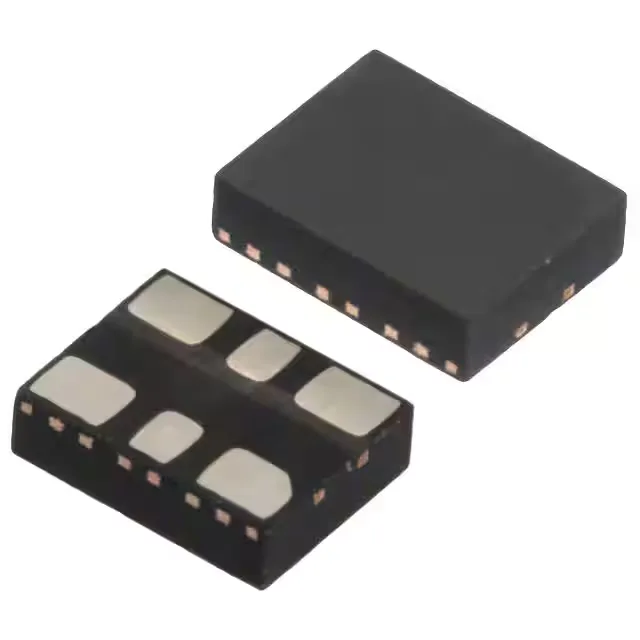
The ASEMPC-16.000MHZ-LR-T is a MEMS-based clock oscillator in the ASEMP Pure Silicon series — the resonator is a silicon micromechanical structure, not a quartz crystal. MEMS oscillators tolerate mechanical shock and board flex better than traditional crystal oscillators, and they start up faster because there is no warm-up drift to wait through. The 16 MHz output is CMOS, which means the drive is a rail-to-rail digital push-pull — the part directly drives a logic input without an external termination resistor. At 16 MHz the 35 mA max supply current is unremarkable for a CMOS oscillator driving a single load, but it doubles to 26 mA disabled, which is the oscillator core still running with the output stage held in high-Z — budget that into any deep-sleep current accounting. For a 16 MHz reference driving a UART at 115200 baud, ±25 ppm gives you roughly ±2880 Hz of total drift — well within the ±2% tolerance most UART bridges tolerate. For a SPI clock the stability matters less since it is a ratio clock; for a real-time kernel tick or a precise ADC sampling interval it is the governing parameter.