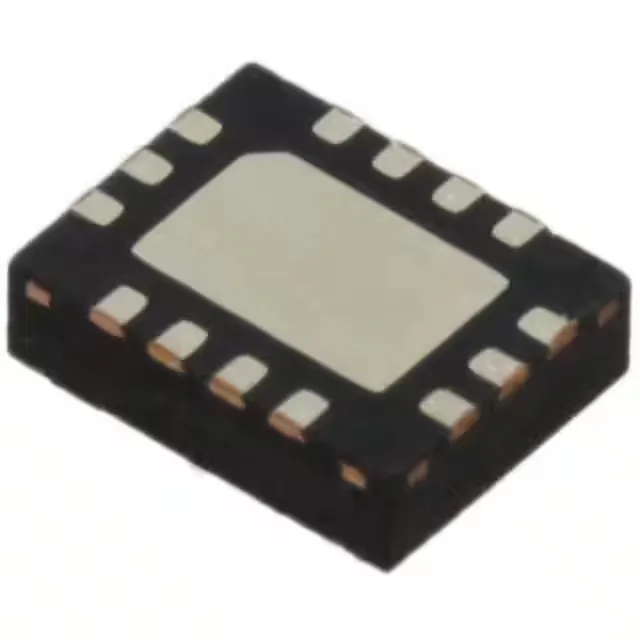
MEMS resonator and the ±25ppm stability question
The ASEMCC3-ZR: The ±25ppm frequency stability rating is the combined drift budget across the operating temperature range and over the device's first-year aging, which is what matters for any timing-sensitive clock domain. A traditional quartz oscillator at ±50ppm would be looser; the ±25ppm figure here puts it in the same class as mid-grade TCXO performance, without the temperature-compensation circuitry — which also means no warm-up drift to track during initial power-up. For a PCIe Gen3 reference clock, for instance, ±25ppm is tighter than the PCIe ±300ppm root-port tolerance, so it clears that bar comfortably. For a BLE SoC running a 32 MHz radio clock, ±25ppm is within the ±40ppm allowed by the BLE specification — the link holds without needing periodic frequency correction.
Enable/Disable control and supply current
The Enable/Disable pin lets the firmware gate the output without removing supply voltage entirely. In disable mode the oscillator draws up to 23 mA — still a real load, so the power-saving benefit depends on how the downstream clock tree distributes that signal. The maximum active supply current of 35 mA at CMOS logic levels means the oscillator is driving into a CMOS input impedance, so the current draw is dominated by the MEMS resonator drive and internal bias — not the output load. On a board where multiple clock domains share one oscillator, leaving it enabled and distributing the CMOS output is standard practice; on a battery-powered node where the radio wakes intermittently, the Enable/Disable pin is the direct power-control path and the 12 mA delta between active and disabled is real standby current saving.
A 125°C maximum ambient leaves margin against the under-hood temperature profile: an engine-bay ECU sees peaks in the 105–110 °C range on a hot day, and the oscillator junction stays within its rating. For a factory-automation PLC module that runs a communication transceiver clock, this grade covers the enclosure heating that occurs during a 24-hour production run without requiring active cooling. The 0.90mm seated height is low enough for modules that stack under a daughtercard or sit in a sealed enclosure with height constraints.