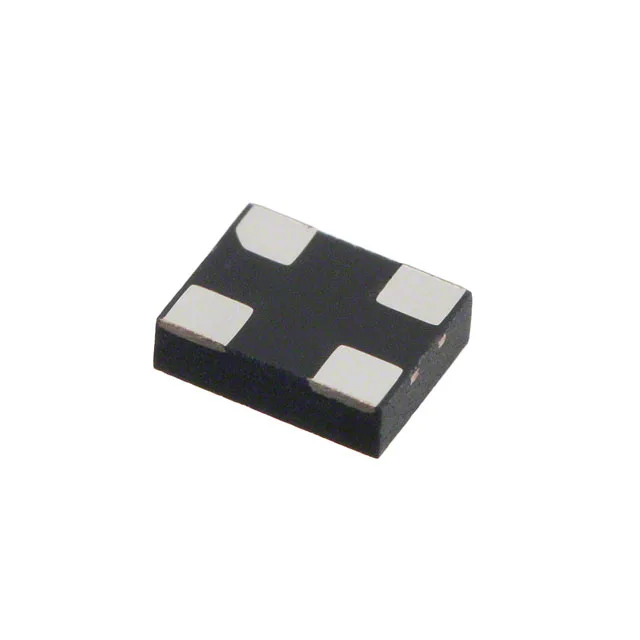
MEMS resonator and clock-tree fit
Built on a MEMS resonator rather than a traditional piezoelectric crystal, the ASEMB-26.000MHZ-L-T trades mechanical fatigue resistance for long-term stability — a meaningful shift for IoT and wireless modules where the board sees repeated thermal cycles and the clock can't drift. At 26 MHz the output is LVCMOS — the default clock-tree format for most microcontroller and SoC PLLs, which means no level-shifting or external buffer is needed at the MCU input.
Power draw in active and standby modes
Maximum supply current is 15 mA in active operation, but in standby the part draws only 15 µA — that three-order-of-magnitude drop is what makes a MEMS oscillator viable for battery-powered designs where the host MCU keeps the clock powered between wake cycles.
Stability and thermal envelope
Frequency stability is ±50 ppm across the full operating range — standard general-purpose timing tolerance, and well within the lock window of most MCU PLL clock inputs that multiply the reference up to their internal bus speeds.