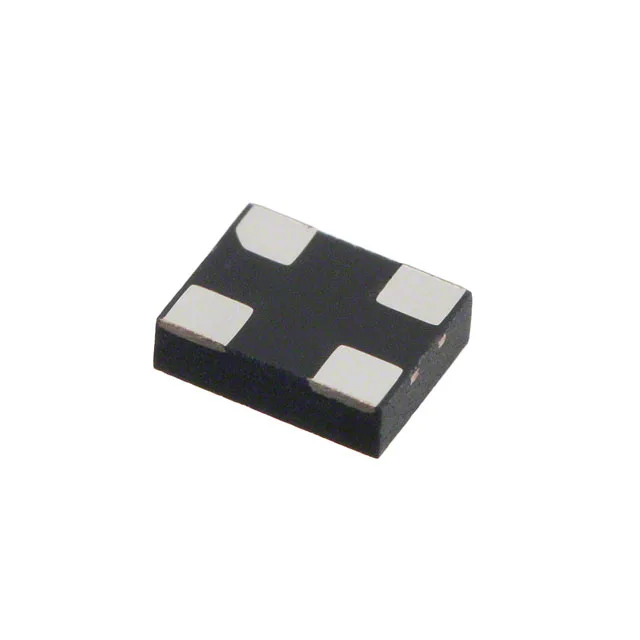
What the MEMS resonator changes for the kitting line
The ASEMB-25.000MHZ-LC-T: The ASEMB series uses a MEMS (micro-electromechanical systems) base resonator rather than an AT-cut crystal — the distinction matters on the production floor because MEMS oscillators are immune to the mechanical shock and vibration fractures that send traditional crystal oscillators to the reject bin during in-circuit test. At 25 MHz with a CMOS output level, this oscillator drives a single digital clock input directly — no termination network required, no load capacitance budget needed like a raw crystal would demand. The ±50 ppm frequency stability covers USB full-speed (which allows ±2000 ppm), Ethernet PHY reference clocks, and most microcontroller PLL inputs without requiring a trim or calibration step at assembly.
Power and voltage — the standby callout that matters for kitting
The 1.8–3.3 V supply range accepts two common rail standards from the same reel — a board built around 1.8 V logic and one built around 3.3 V can both run this part without a BOM split. In active mode it draws up to 16 mA; in standby (power-down) the supply current drops to 15 µA maximum, so a board held in a low-power hold state draws negligible current from the rail this oscillator shares.
Package footprint and reel-ready packaging
It is not automotive AEC-Q qualified, so it does not belong on an under-hood BOM without a separate qualification run.