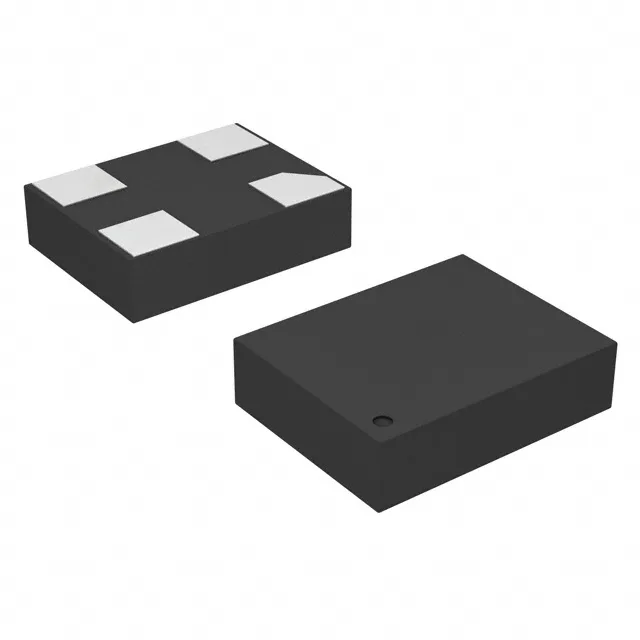
Why 1.8432 MHz matters for UART timing
The ASEM1-1.8432MHZ-LC-T: The 1.8432 MHz output is the canonical baud-clock crystal for 115200 bit/s UART operation — it divides evenly to 115200 via a /16 divisor, giving a clean 7.3728 MHz master clock halved once. CMOS push-pull output stage drives the fan-out to one or two receiver inputs without external termination; the logic-high level tracks the 3.3 V rail, so level compatibility with 3.3 V MCUs and SoCs is inherent — no translator required.
MEMS resonator advantage and the standby function
The MEMS-based resonator inside the ASEM series eliminates the cold-start tolerance drift that affects traditional crystal XO units. Mechanical resilience also makes the part more tolerant of board flex and hand-assembly rework without frequency shift — a meaningful advantage in portable or mechanically stressed enclosures. When the host MCU drives the standby pin low, the oscillator draws a maximum of 1 µA, compared to 15 mA during active operation. For battery-powered nodes that sleep between transmissions, the standby current draw determines shelf life — 1 µA sits below the self-discharge floor of most coin-cell chemistries, so the oscillator ceases to be a meaningful load when the system is off.
Temperature grade and frequency stability
The ±50 ppm frequency stability specification bounds long-term drift including initial accuracy, temperature over range, and aging for the first year — sufficient for UART timing without requiring software calibration of the baud-rate generator. Package height is 0.90 mm seated maximum, which clears the 0.80 mm board-level clearance requirement in portable device layouts and sits below the typical 1.00 mm connector standoff on mezzanine boards.