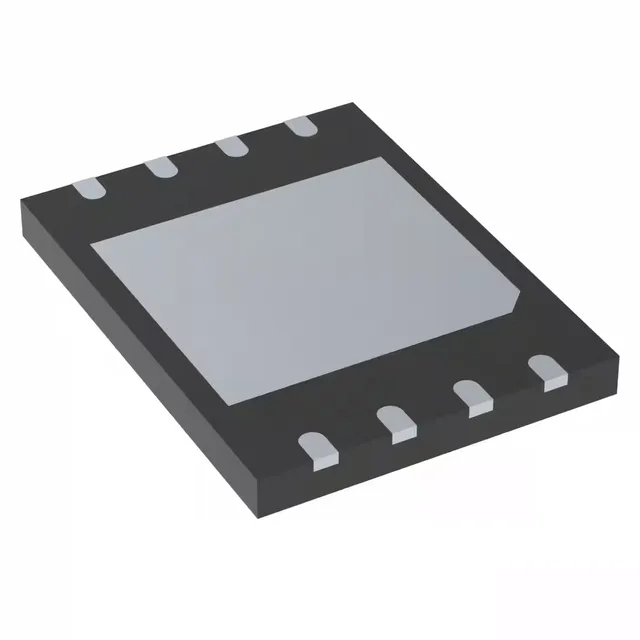
The Winbond W25Q512JVEIQ TR is a 512 Mbit (64 MB) SpiFlash® serial NOR flash organized as 64M x 8, the highest-density variant in this W25Q group and a genuine high-capacity NOR part. It is packaged in an 8-lead WDFN with exposed pad, presented as an 8-WSON measuring 8 mm x 6 mm, and supplied on tape and reel for volume SMT assembly.
Sixty-four megabytes in an eight-pin package changes what a small board can hold. Beyond boot code, a device can carry a full filesystem image, embedded GUI assets, font and audio libraries, and enough slack for A/B OTA image slots; a storage budget previously associated with eMMC or serial NAND, but with the random-read behavior and endurance profile of NOR.
The part operates from 2.7 V to 3.6 V over -40°C to 85°C with a 133 MHz clock and standard SPI plus Dual/Quad I/O. Note that at this density the specification does not list the QPI/DTR modes of the 128 Mbit J-series parts, so plan around Quad I/O throughput. The exposed pad deserves a solid ground-plane connection, given the sustained programming currents of large-image updates.
Choose the W25Q512JVEIQ TR when the design demands 64 MB of code-plus-asset storage in a package no larger than an SOIC-8 alternative; the reel packaging supports production volume directly. If the board is 1.8 V only, step down to the W25Q256JWEIQ for the low-voltage 256 Mbit tier instead.