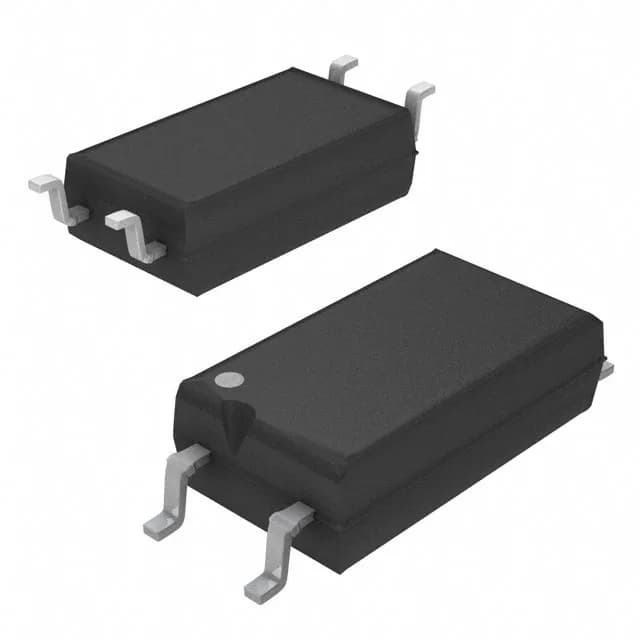
The Toshiba TLP385(D4Y-TPR,E is a single-channel transistor-output optocoupler in a 6-SOIC 4-lead surface-mount package. It provides 5000Vrms galvanic isolation between a DC input LED and a phototransistor output, with a current transfer ratio (CTR) guaranteed between 50% and 150% at a 5mA forward current. The output transistor is rated for 80V and 50mA continuous, making it a fit for isolated feedback in switch-mode power supplies, motor-drive IGBT gate-drive status feedback, PLC digital input modules, and general-purpose signal isolation in industrial controls. The -55°C to 110°C operating range covers both cold-start and under-hood environments without derating.
5000Vrms isolation — what it buys you in a real design
A 5000Vrms isolation rating means this part passes a 5kV dielectric withstand test for 60 seconds per the component standard. That is enough headroom for reinforced insulation in mains-connected equipment (250V working voltage) and for basic isolation in 480VAC motor-drive applications where transient overvoltages can exceed 2kV. The 6-SOIC 4-lead package with 4.40mm body width provides the creepage distance needed to maintain the rating across the PCB — no slotting required in most designs.
CTR range and switching speed — design margin decisions
The 50% to 150% CTR window at 5mA If is wide enough that you size the input resistor for the minimum CTR to guarantee the output saturates at the load current. At the 50% floor, 5mA in gives 2.5mA available at the output — enough to drive a 1kΩ pull-up to 5V with margin. The 2µs rise and 3µs fall times (typical) and 3µs turn-on/turn-off times keep this part in the low-speed isolation lane: fine for 10kHz PWM feedback, relay coil monitoring, or 9600-baud serial isolation, but not for high-speed data links. If you need sub-microsecond switching, look at a digital isolator or a logic-output optocoupler.
Package, footprint, and sourcing posture
The 6-SOIC 4-lead footprint is shared across the TLP385 family, so the D4Y-TPL,E (different CTR bin or packaging) is a drop-in alternate if the CTR bin is acceptable. The part is RoHS compliant per the listing. Lifecycle status is active, so no near-term end-of-life concern for new designs.