5000 Vrms isolation — the spec that defines the fit
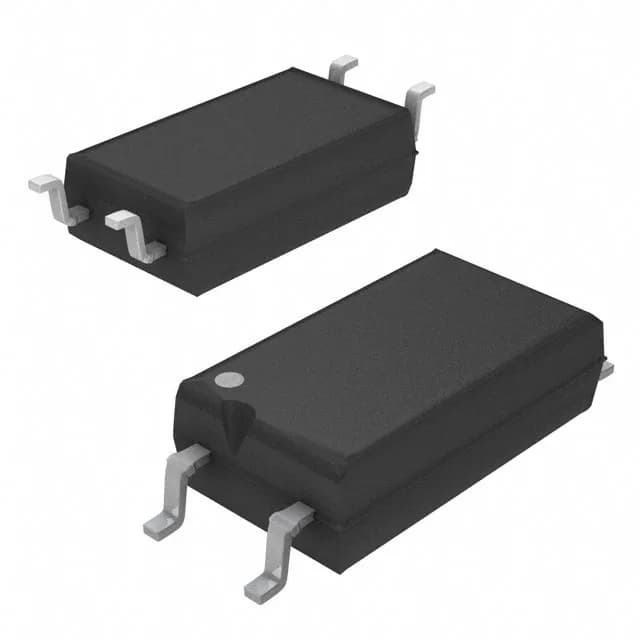
The Toshiba TLP385(D4Y-TPL,E is a single-channel transistor-output optocoupler rated for 5000 Vrms input-to-output isolation. That isolation voltage puts it squarely in industrial motor drives, mains-referenced power supplies, and medical equipment where reinforced isolation is required. The DC input and transistor output keep the interface simple — no logic-level translation, just a phototransistor that switches the output side. The 6-SOIC package with 4 leads (two on each side) is the standard SO-4 footprint used across the TLP385 family.
CTR range — 50% to 150% at 5 mA
The current transfer ratio spans 50% minimum to 150% maximum, both specified at 5 mA forward current. That 3:1 spread means the designer must size the collector load resistor for the weakest CTR and verify the phototransistor does not saturate at the strongest. For a 5 mA LED drive, expect 2.5 mA to 7.5 mA available at the output — enough to drive a logic gate input directly in most cases. The 300 mV Vce saturation at the output side keeps the voltage drop low when the transistor is fully on.
Switching speed and output ratings
Rise and fall times are 2 µs and 3 µs typical; turn-on and turn-off times are both 3 µs typical. That puts this part in the general-purpose optocoupler class — fine for 10 kHz PWM or 115200 baud serial isolation, but not for high-speed digital isolator applications. The output side can handle up to 80 V and 50 mA continuous, so it can drive a small relay coil or a gate resistor directly. Forward current is limited to 50 mA DC with a typical forward voltage of 1.25 V.
Temperature range and environment
Operating temperature covers -55°C to 110°C, which spans industrial and extended-temperature environments. The 110°C ceiling is a few degrees short of the 125°C typical for automotive under-hood parts, but it works in outdoor telecom cabinets, factory floor sensors, and power supply feedback loops that see elevated ambient temperatures. Storage range is not specified in the listing, but the operating range is the one that governs the design.
Lifecycle and compliance
Listed as active with RoHS compliance confirmed. The SO-4 footprint is shared across the TLP385 family, so a reel change to a sibling variant like the TLP385(D4Y-TPR,E is a straight pick-and-place adjustment — no board respin needed.