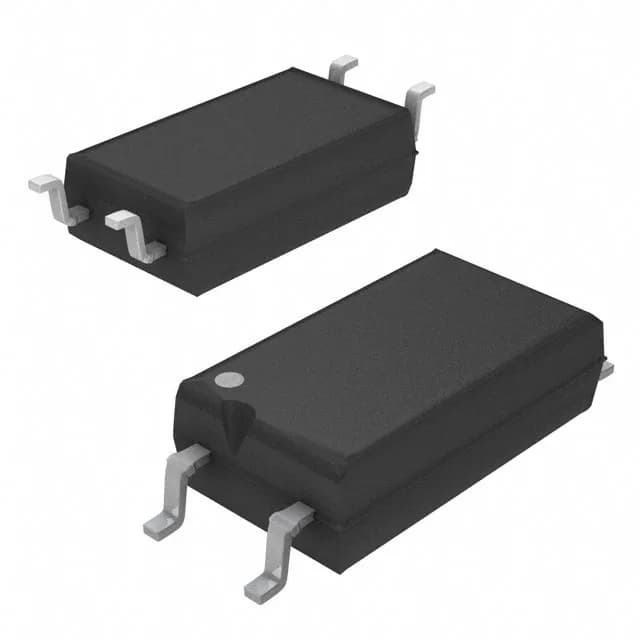
What this optocoupler brings to the board
The Toshiba TLP385(D4GH-TL,E is a single-channel transistor-output optocoupler in a 6-SOIC package with 4 leads. It takes a DC input on the LED side and switches a phototransistor on the output, providing 5000Vrms of galvanic isolation between the two sides. The wide current transfer ratio — 50% to 600% at 5mA forward current — gives you headroom for LED aging and lets you drive logic inputs or small relays directly. Output can handle up to 80V and 50mA per channel, which covers most industrial signal isolation and low-power switching tasks. The -55°C to 110°C operating range means it works in outdoor telecom cabinets, motor-drive feedback, and engine-bay electronics without derating.
CTR range — why it matters for the BOM
The 50% minimum CTR at 5mA forward current is the number to design around. If you need to guarantee a logic-high into a 5V CMOS input with a 10kΩ pull-up, 50% CTR at 5mA gives you 2.5mA output drive — enough to pull the line low with margin. The 600% maximum means you can run the LED at lower current (say 1mA) and still get enough output current to switch a transistor, saving power in battery-operated designs. That wide spread also means you don't need to bin parts for tight CTR windows — the same order code covers both high-gain and low-gain applications.
Package and footprint reality
This is a 6-SOIC package with 4 leads — the extra two pins are unused or for creepage distance. The body is 4.40mm wide, so it fits the standard SOIC-6 footprint. Surface-mount only, no through-hole option. The 4-lead variant saves board space compared to a full 6-pin DIP, and the 5000Vrms isolation is achieved with internal optical path and mould compound, not external slots. If you're replacing a DIP-4 optocoupler in an existing design, check the pad layout — the 6-SOIC pitch is 1.27mm, same as SOIC-8, but the body width is narrower.
Lifecycle and sourcing
It's RoHS compliant, which is the baseline for new designs shipping into EU or California markets.