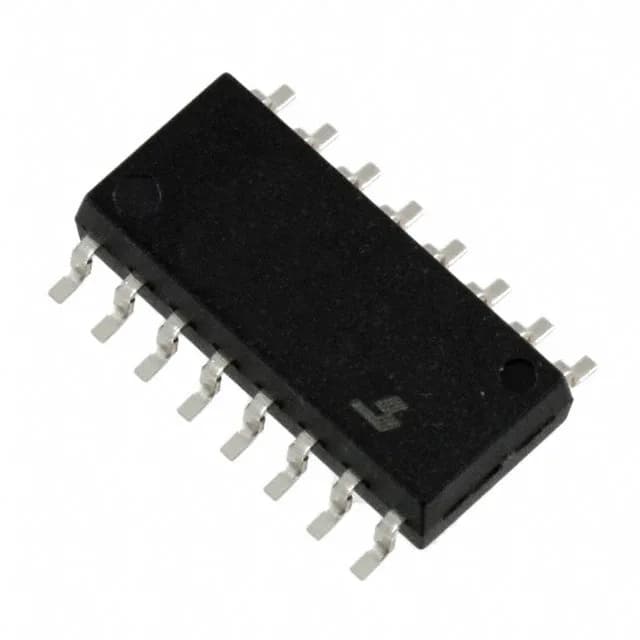
The Toshiba TLP292-4(TPR,E is a four-channel transistor-output optocoupler in a 16-SOIC package. Each channel provides 3750Vrms galvanic isolation between a bi-directional AC/DC LED input and a phototransistor output. The AC input capability means the LED side can sense line-frequency signals or bipolar logic levels without an external bridge rectifier — a space-saving feature in a quad package. With a 50% to 600% current transfer ratio (CTR) specified at 5 mA forward current, the part accommodates wide LED efficiency variation across temperature and aging, which simplifies the drive-current budget in industrial PLC digital inputs, motor-drive feedback isolation, and power-supply status monitoring.
3750Vrms isolation and 80 V output — the ratings that decide the fit
The 3750Vrms isolation voltage is the per-channel rating for a 60-second hipot test. For reinforced insulation in mains-connected equipment, this typically satisfies basic insulation at 250 Vrms working voltage; check your system's creepage and clearance requirements against the 4.55 mm body width. The 80 V output rating means each transistor can switch a 48 V nominal bus (like a PLC backplane or telecom rail) with headroom for transients. The 50 mA per-channel continuous output current is adequate for driving a small relay coil, an LED indicator, or a logic-level input — but not a power solenoid directly.
Military temperature range — not just a spec
It qualifies the TLP292-4(TPR,E for avionics attitude-control interfaces, satellite bus telemetry, and downhole sensor isolation where commercial 85°C parts would drift out of CTR spec. The 2 µs rise and 3 µs fall times and 3 µs turn-on/turn-off times are typical for a standard transistor output — adequate for 10 kHz to 50 kHz switching in IGBT gate-drive status feedback or AC-line zero-cross detection, but not for high-speed data isolation above 100 kbps.
The CTR range of 50% to 600% at 5 mA is wide — typical for a standard-grade Toshiba photocoupler. In production, a 50% CTR unit needs 10 mA LED drive to saturate the output transistor, while a 600% unit saturates at under 1 mA. If your design drives the LED from a fixed resistor, worst-case at 50% CTR sets the minimum LED current; the 600% units simply saturate harder with no penalty. The 1.25 V typical forward voltage and 50 mA absolute-max LED current are standard for an infrared LED. The AC input capability means the LED conducts on both half-cycles, so a series capacitor sets the impedance for AC line sensing without a bridge.
Package and supply-chain note
The supplier device package is 16-SO. The part is ROHS3 compliant. The TPR suffix indicates the tape-and-reel packing quantity; the same die is available in tube (TLP292-4) or different reel sizes. The laser etch on the top of the package should read Toshiba's standard marking — date-code font consistency is a quick check for grey-market stock.