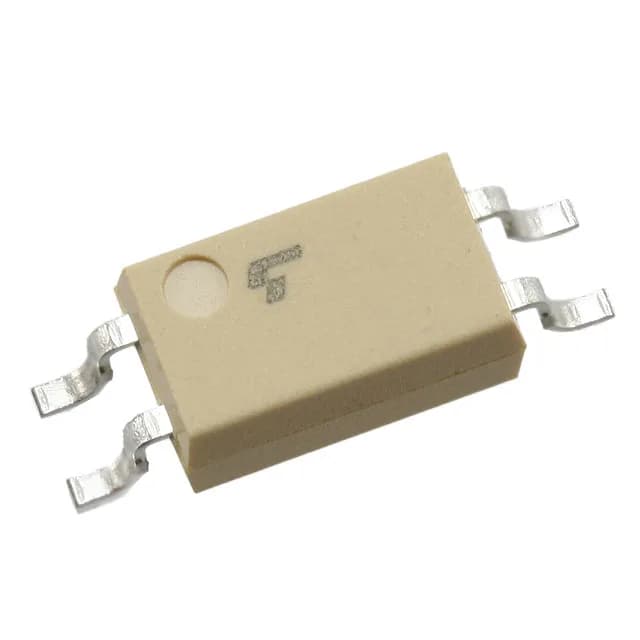
Toshiba Semiconductor TLP291(GB,SE — Optoisolators

TLP291(GB,SE Optoisolator, 3750Vrms, Transistor Output

MPNTLP291(GB,SE
End of Life

Toshiba TLP291(GB,SE single-channel DC-input transistor-output optocoupler, 3750Vrms isolation, 100-600% CTR at 5mA, 80V output max, 4-SOIC package, Tube, -55°C to 110°C.

$0.59Ref. price · indicative, final on quote
Packaging4-SOIC (0.179", 4.55mm Width)
StockContact for availability
MOQ1 pcs
  • 100% new & originalTraceable channels only — no refurbs, no pulls, no remarked parts.
  • Date & lot codes on quoteStated per line before you commit; label photos on request.
  • MSL-compliant ESD packingMoisture-sealed bags with indicator cards; reels photo-verified.
  • PayPal buyer protectionPay by T/T, PayPal or Payoneer — card payments covered end to end.

Specifications

TLP291(GB,SE Technical Specifications
ParameterValue
Input typeDC
Output typeTransistor
Mounting typeSurface Mount
Voltage - isolation3750Vrms
Voltage - output80V
Voltage - forward (Vf)1.25V
Current - output (Channel)50mA
Current transfer ratio600% @ 5mA
Current - DC forward (If)50 mA
Operating temperature-55°C ~ 110°C
PackageTube
Case4-SOIC (0.179\", 4.55mm Width)
Number of channels1
Vce saturation300mV
Rise (Fall time)2µs, 3µs
Turn on (Turn off time)3µs, 3µs

Product details

The TLP291(GB,SE is a single-channel DC-input, transistor-output optocoupler from Toshiba in a 4-SOIC surface-mount package. Its 3750Vrms isolation rating suits basic or functional isolation in industrial controls, PLC I/O modules, motor-drive feedback, and isolated sensor interfaces where the signal path needs a galvanic barrier without the footprint of a DIP-8. The transistor output with a minimum current transfer ratio of 100% and maximum of 600% at 5 mA forward current gives you headroom to drive logic inputs or small relays directly, while the 80 V output rating handles higher-side switching in 24 V or 48 V industrial rails.

Combined with ROHS3 compliance, this part is qualified for ongoing design-in and production without a forced migration timeline. For dual-sourcing flexibility, the TLP291 family includes CTR-binned variants such as TLP291(GR,SE (lower CTR range) and TLP291(BL-TP,SE (higher CTR range), all sharing the same 4-SOIC footprint and 3750Vrms isolation rating.

Switching speed and CTR — sizing the drive margin

That is adequate for isolated digital inputs, relay coil drives, and slow serial buses where the propagation delay is not the timing bottleneck. The 100% minimum CTR at 5 mA forward current means a 5 mA input can deliver at least 5 mA at the output — enough to saturate the transistor and pull a 5 V logic input low with margin. The 300 mV max Vce saturation keeps the on-state voltage drop low, so the output can sink the rated 50 mA per channel without excessive dissipation.

Temperature range and mounting

The 4-SOIC package (4.55 mm body width) is a compact footprint for high-density boards, and the surface-mount format aligns with standard reflow processes. The Tube shipping medium is typical for engineering samples and low-volume production; reeled options (e.g., TLP291(GRL-TP,SE) are available for higher-volume pick-and-place.

Frequently asked questions

What is the CTR range of TLP291(GB,SE and why does it matter?

The current transfer ratio is specified at 100% minimum and 600% maximum at 5 mA forward current. A 100% minimum CTR ensures the output transistor can sink at least 5 mA when the LED is driven with 5 mA, which is sufficient to pull a standard TTL/CMOS logic input low. The 600% maximum gives you gain margin for driving loads like small relays or optocoupler cascades without extra buffer stages.

What is the replacement or equivalent for TLP291(GB,SE?

The TLP291 family includes CTR-binned variants that are footprint-compatible and share the same 3750Vrms isolation and 4-SOIC package. TLP291(GR,SE covers a lower CTR range, while TLP291(BL-TP,SE covers a higher CTR range. All are active and ROHS3 compliant. For a direct functional equivalent with the same CTR bin, stick with the (GB) suffix.