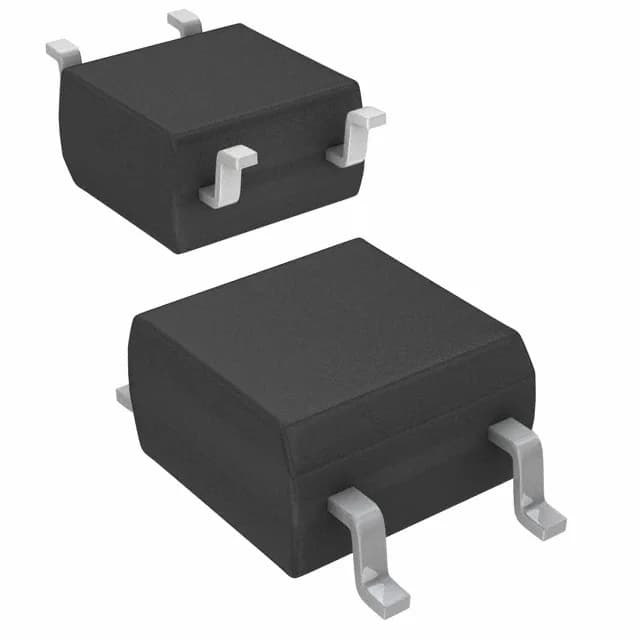
600 V off-state triac coupler for AC load switching
The Toshiba TLP267J(TPL,E is a single-channel triac-output optocoupler in a 6-SOP surface-mount package. It blocks 600 V off-state and provides 3750 Vrms isolation between the LED input and the triac output, making it suited for driving AC loads — solenoids, relays, small motors, and resistive heaters — from low-voltage logic without a separate isolated supply on the load side. The 500 V/µs (typical) static dV/dt immunity means the output triac resists false turn-on from fast mains transients or inductive kickback, a common failure mode in motor-drive and contactor-coil circuits. Turn-on time is 100 µs, fast enough for phase-angle dimming or zero-cross-switched loads at 50/60 Hz. There is no zero-crossing circuit — the triac fires as soon as the LED current exceeds the 3 mA (max) trigger threshold. That gives the designer direct control over the firing angle, which is why this part shows up in lamp dimmers, soft-start circuits, and solid-state relay designs where the turn-on point matters.
Package, footprint, and replacement fit
The 6-SOP package (0.173" body width, 4.40 mm) uses four active leads — two for the LED input, two for the triac output — in the standard SOIC-6 footprint that Toshiba and competitors use across this coupler family. The die and ratings are identical — same 600 V off-state, same 3750 Vrms isolation, same 100 µs turn-on. No PCB change needed.
Forward current and drive requirements
The LED forward voltage is 1.27 V (typical), and the maximum DC forward current is 30 mA. The hold current (Ih) is 200 µA (typical), which keeps the triac latched once triggered through the full AC half-cycle down to light loads. On-state current is rated 70 mA RMS maximum — sized for driving a gate resistor to a larger external triac or a small load directly. For loads above 70 mA, use this coupler to drive the gate of a power triac or back-to-back SCR pair.
Temperature range and approvals
The part carries CQC, cUR, and UR safety approvals, which simplifies certification for equipment sold into North American and Chinese markets.
Lifecycle and sourcing posture
RoHS-compliant per the listing.